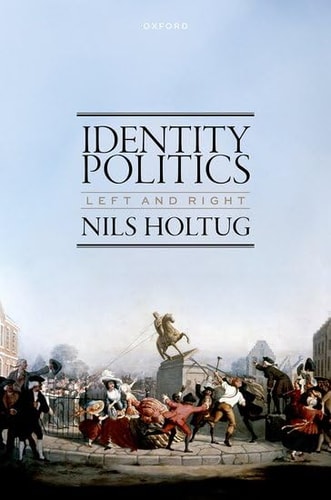
Identity Politics: Left and Right
0
0
As an Amazon Associate and affiliate partner, Menrva Books earns from qualifying purchases. Learn more
Author Description
According to a common narrative, identity politics derives from leftist postmodernism, and is antithetical to both liberalism and Enlightenment universalism. This narrative, however, is false. Identity politics is propagated not only by the left but also by the right-and it is not tied to postmodernism. Various forms of identity politics are, in fact, quite compatible with liberalism and Enlightenment values.Based on a liberal egalitarian framework, Nils Holtug argues that some forms of identity politics are well worth pursuing, while others should clearly be resisted. Among other things, identity politics can serve to increase the opportunities of worse off, marginalized groups. In this book, Holtug considers and assesses specific identity policies, including affirmative action for African Americans, opposition to the n-word and blackfacing, and the backlash against cultural appropriation and out-group representation in art.Identity Politics surveys various forms of 'cancel culture', such as no platforming and the pulling down of statues depicting morally compromised historical figures. Holtug also scrutinizes instances that are more specific to the political right, including white supremacism and ethnopluralism. Finally, he considers the suggestion that identity politics is divisive and drives down social solidarity, arguing that while some forms of identity politics do indeed drive down solidarity, this is less clear in the case of the minority-accommodating policies.
Menrva's Summary
THE THESIS
This book investigates the validity of the common narrative that identity politics is exclusively a product of leftist postmodernism by examining its presence across the political spectrum. Nils Holtug, a professor of political theory, utilizes a liberal egalitarian framework to evaluate the moral and political implications of various identity-based movements. He argues that identity politics is not inherently antithetical to Enlightenment values and that its impact on social solidarity depends heavily on the specific policies and goals being pursued.
THE SCOPE MAP
What You Will Find
- A comparative analysis of identity politics as practiced by both the political left and the political right.
- An evaluation of specific policies including affirmative action, cultural appropriation, and out-group representation in art.
- A critical examination of cancel culture phenomena such as no-platforming and the removal of historical statues.
- A discussion on the relationship between minority-accommodating policies and social solidarity.
THE AUTHORITY PERSPECTIVE
Experts recognize this work as a rigorous philosophical intervention that challenges polarized assumptions about identity-based political movements. Readers frequently note the analytical clarity of the prose, which provides a structured approach to evaluating complex and often contentious social issues.
Page Count:
304
Publication Date:
2025-07-10
Publisher:
Oxford University Press
ISBN-10:
0198954522
ISBN-13:
9780198954521
Politics
Philosophy
Liberalism
Social Issues
Sociology
Community Tags
Similar Books