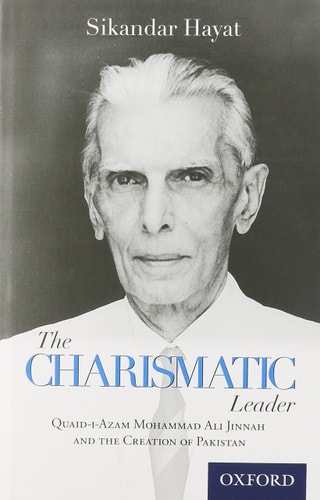
The Charismatic Leader: Quaid-i-Azam M.A. Jinnah and the Creation of Pakistan
0
0
As an Amazon Associate and affiliate partner, Menrva Books earns from qualifying purchases. Learn more
Author Description
This second, revised edition of the book is an updated version, covering the most recent writings on the subject, especially in India, and provides a detailed and systematic analysis of the charismatic leadership of Quaid-i-Azam Mohammad Ali Jinnah, the leader of Indian Muslims during the crisis-ridden decade of 1937-47.Based on the concept of charisma formulated by Max Weber and developed by recent writers, the study concentrates on the "personality-related" and "situational" factors that led to the emergence of Jinnah as the charismatic leader of the Muslims and sustained him in that role until the creation of Pakistan. In explaining and explicating Jinnah's charisma, his early political career and the crises facing the Muslims of British India, both systemic and of leadership, have been examined at length. A particular emphasis has been placed on the roles of Aga Khan, Mian Fazl-i-Hussain, Sikandar Hayat Khan, Khizar Hayat Khan Tiwana, Maulana Abul Kalam Azad, and Maulana Hussain Ahmad Madani. This has been followed by a discussion of Jinnah's "formula" of Pakistan, including the criticisms of the Lahore Resolution by the then Hindu leadership and Indian writers of today. Subsequently, an effort has been made to highlight Jinnah's strategy for political mobilization of the Muslims and their organization under the banner of the All-India Muslim League. Finally, his struggle for the creation of Pakistan as the charismatic leader of the Muslims, in spite of the combined opposition of the British and the Congress, is evaluated and assessed, especially in the context of his accepting and then rejecting the Cabinet Mission Plan of 1946, the last constitutional plan to keep India united. In their "enthusiasm, despair, and hope", the Muslims rallied behind Jinnah and his Pakistan demand like never before. The result was that, at the creation of Pakistan in August 1947, his charisma was truly at its "zenith". He had accomplished his mission.
Menrva's Summary
THE THESIS
This study investigates the emergence and sustainment of Mohammad Ali Jinnah as a charismatic leader during the pivotal decade of 1937-1947, which culminated in the creation of Pakistan. Author Sikandar Hayat utilizes the Weberian framework of charisma to analyze the intersection of personality traits and situational crises within British India. By examining the systemic failures of existing leadership and the socio-political environment of the time, the book argues that Jinnah's rise was a product of both individual agency and the specific needs of the Muslim population.
THE SCOPE MAP
What You Will Find
- A systematic application of Max Weber's theory of charismatic leadership to the political career of Jinnah.
- Detailed analysis of the political roles played by key figures including Aga Khan, Mian Fazl-i-Hussain, and Maulana Abul Kalam Azad.
- Examination of the strategic mobilization of Indian Muslims under the All-India Muslim League.
- Evaluation of the 1946 Cabinet Mission Plan and the subsequent political maneuvers leading to the partition of India.
THE AUTHORITY PERSPECTIVE
Scholars and historians recognize this work as a rigorous academic examination of the political mechanics behind the partition of India. Experts frequently highlight the author's balanced use of historical documentation and theoretical frameworks to explain the complexities of Jinnah's leadership style.
Page Count:
520
Publication Date:
2014-09-10
Publisher:
Oxford University Press
ISBN-10:
0199069204
ISBN-13:
9780199069200
Biography
History
Statesmen biography
Political Leadership
Community Tags
Other Editions(3)
Similar Books






Reader Comments
Share Your Thoughts
No comments yet. Be the first to share your thoughts!