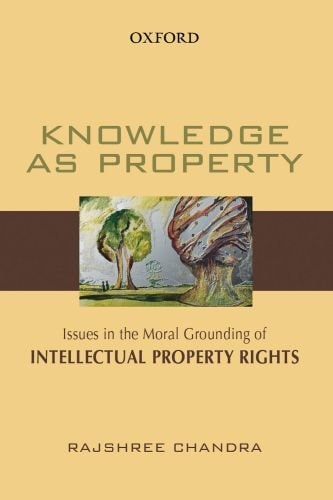
Knowledge as Property: Issues in the Moral Grounding of Intellectual Property Rights
0
0
As an Amazon Associate and affiliate partner, Menrva Books earns from qualifying purchases. Learn more
Author Description
Intellectual Property Rights (iprs)—the Idea Of Knowledge As Property—and Its Role In Human Society Is Being Increasingly Discussed Across Nations And Borders. Involving Legal, Political, Cultural, And Ethical Issues, Debates On Iprs Continue To Be Complex And Wide-ranging. This Book Analyses The Basic Assumptions And Premises Of The Notion Of Intellectual Property As A Right. It Goes On To Show How Iprs Prevent Those Who Do Not Own It From Accessing And Exercising Their Own Diverse Rights. Thus, In A Way, Iprs Violate The Very Idea Of Individual Autonomy On Which It Bases Its Claims. Highlighting The Inherent Propensity Of Iprs To Conflict With'other Rights Of Other Peoples' This Volume Examines Three Important Rights: Health Rights, Indigenous Peoples' Knowledge Rights, And Farmers' Rights. Do Iprs Derive Any Legitimacy From Its Ability To Support Or Conjoin With These Rights? Do Iprs Fit Within A Framework Of Rights, Which Unites Welfare, Well Being, And Equal Access To Advantage And Autonomy? These Are Questions Which Arise Out Of The Varied Contestations That Have Emerged In The Face Of Iprs And Which Have Been Probed In This Book. The Analyses Also Moves Beyond To Explore Some Of The Broader Challenges That Liberal Theory Of Rights Faces From Collective Claims To Knowledge Rights And Practices.
Menrva's Summary
THE THESIS
This book investigates the moral legitimacy of intellectual property rights (IPRs) by questioning whether the concept of knowledge as property aligns with broader human rights and individual autonomy. Rajshree Chandra, an expert in political theory and law, examines the foundational premises of IPRs to determine if they conflict with fundamental human needs. By analyzing the intersection of legal frameworks and ethical obligations, the author argues that current IPR structures often undermine the very autonomy they claim to protect.
THE SCOPE MAP
What You Will Find
- Analysis of the liberal theory of rights in relation to collective knowledge claims.
- Examination of the conflict between IPRs and health rights, indigenous knowledge, and farmers' rights.
- Evaluation of whether IPRs can exist within a framework that prioritizes welfare and equal access.
- Critique of the moral grounding of property rights as applied to intangible knowledge.
THE AUTHORITY PERSPECTIVE
Scholars and legal practitioners recognize this work as a critical contribution to the discourse on global intellectual property policy. Readers frequently note the academic density of the prose, which provides a rigorous examination of the tension between private ownership and public access.
Page Count:
400
Publication Date:
2012-01-01
Publisher:
OUP India
ISBN-10:
0199088187
ISBN-13:
9780199088188
Philosophy
Human rights
Ethics
Franchising
Kindle Store
Intellectual Property
Categories
Kindle eBooks
Law