The Politics of Reconciliation in Multicultural Societies
0
0
As an Amazon Associate and affiliate partner, Menrva Books earns from qualifying purchases. Learn more
Author Description
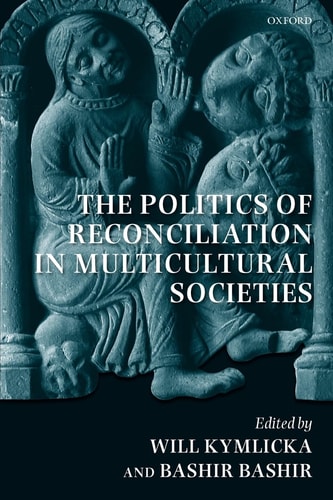
Most countries around the world exhibit a long history of exclusion and discrimination directed against ethnic, racial, national, religious, or ideological groups. The underlying justifications for these forms of exclusion have been increasingly discredited by the post-war human rights revolution, decolonization, and by contemporary norms of liberal-democratic constitutionalism, with their commitment to equal rights and non-discrimination. However, even as these older practices and ideologies of exclusion are discredited and repudiated, they continue to have enduring effects. The legacies of exclusion can still be seen in a wide range of social attitudes, cultural practices, economic and demographic patterns, and institutional rules that obstruct efforts to build genuinely inclusive societies of equal citizens. Finding ways to overcome this problem is a major challenge facing virtually every society around the world.The Politics of Reconciliation in Multicultural Societies focuses on two parallel intellectual and political movements that have arisen to address this challenge: the 'politics of reconciliation', with its focus on reparations, truth-telling and healing amongst former adversaries, and the 'politics of difference', with its focus on the recognition and empowerment of minorities in multicultural societies. Both the politics of reconciliation and the politics of difference are having a profound impact on the theory and practice of democracy around the world, but remarkably little has been written about the relationship between them. This book aims to fill that gap.Drawing on both theoretical analysis and case studies from around the world, the authors explore how the politics of reconciliation and the politics of difference often interact in mutually supportive ways, as reconciliation leads to more multicultural conceptions of citizenship. But there are also important ways in which the two may compete in their aims and methods. The Politics of Reconciliation in Multicultural Societies is the first attempt to systematically explore these areas of potential convergence and divergence.
Menrva's Summary
THE THESIS
This book investigates the complex, often overlooked intersection between the politics of reconciliation and the politics of difference in contemporary multicultural societies. Bashir Bashir and Will Kymlicka, both established scholars in political theory and ethnic relations, utilize a comparative framework to analyze how states address historical legacies of exclusion. They argue that while these two movements often support one another in fostering inclusive citizenship, they can also present competing objectives and methodologies that complicate democratic reform.
THE SCOPE MAP
What You Will Find
- Theoretical analysis of the relationship between restorative justice and minority empowerment.
- Comparative case studies examining diverse national contexts of historical exclusion.
- An evaluation of how truth-telling and reparations influence modern constitutional norms.
- A critical assessment of the tensions between individual equality and group-based recognition.
THE AUTHORITY PERSPECTIVE
Experts identify this work as a significant contribution to the literature on democratic theory and ethnic conflict resolution. Readers frequently note the academic density of the prose, which makes it a valuable resource for researchers and students of political science.
Page Count:
258
Publication Date:
2008-09-15
Publisher:
Oxford University Press
ISBN-10:
0199233802
ISBN-13:
9780199233809
Reconciliation
Democracy
Sociology
Human rights
Community Tags
Other Editions(2)
Similar Books



Reader Comments
Share Your Thoughts
No comments yet. Be the first to share your thoughts!