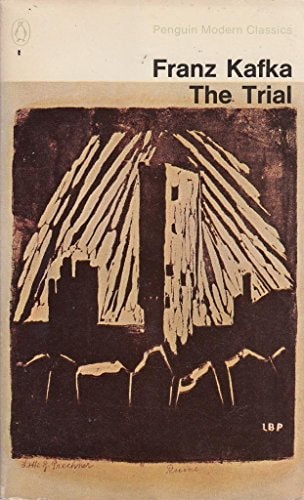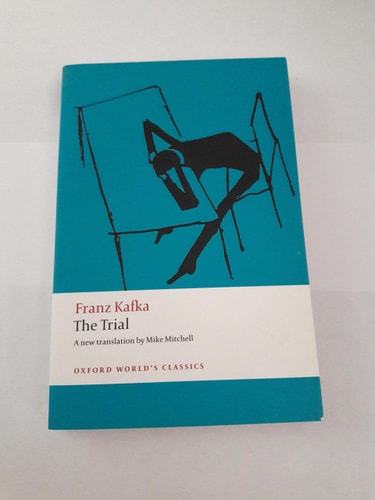
The Trial
0
0
As an Amazon Associate and affiliate partner, Menrva Books earns from qualifying purchases. Learn more
Author Description
One of the great works of the twentieth century, Kafka's The Trial has been read as a study of political power, a pessimistic religious parable, or a crime novel where the accused man is himself the problem. In it, a man wakes up one morning to find himself under arrest for an offence which is never explained. Faced with this ambiguous but threatening situation, Josef K. gradually succumbs to its psychological pressure. One of the iconic figures of modern world literature, Kafka writes about universal problems of guilt, responsibility, and freedom. He offers no solutions, but provokes his readers to arrive at meanings of their own. Mike Mitchell's translation captures Kafka's distinctive style. Based on the best available German text, it includes not only the main text but the chapters Kafka left incomplete. In his Introduction, Ritchie Robertson considers the many puzzles in the novel and the different interpretations to which the novel has been subjected. The book also includes a Biographical Preface, an up-to-date bibliography, and a chronology of Kafka's life.About the Series: For over 100 years Oxford World's Classics has made available the broadest spectrum of literature from around the globe. Each affordable volume reflects Oxford's commitment to scholarship, providing the most accurate text plus a wealth of other valuable features, including expert introductions by leading authorities, voluminous notes to clarify the text, up-to-date bibliographies for further study, and much more.
Menrva's Summary
THE PULSE
Josef K. is arrested one morning for an unspecified crime, initiating a nightmarish struggle against an impenetrable and faceless legal bureaucracy. The protagonist, a bank official, finds his life systematically dismantled by a judicial system that operates without logic or transparency. As he attempts to defend himself against charges he cannot comprehend, he encounters a series of bizarre, obstructive figures who represent the arbitrary nature of authority. The narrative, presented in a detached and claustrophobic third-person perspective, follows K. as he descends into a state of psychological paralysis, reflecting the inherent tension between individual agency and systemic oppression.
INSIDE THE PAGES
- Surrealist atmosphere that blurs the line between reality and nightmare
- Bureaucratic satire targeting the inefficiency and cruelty of institutional power
- Exploration of existential guilt and the burden of undefined responsibility
- Non-linear progression of legal proceedings that defy standard judicial logic
- Use of claustrophobic, dimly lit settings to mirror the protagonist's mental state
- Recurring motifs of hidden doors, labyrinthine corridors, and inaccessible authorities
- Unreliable narrative perspective that emphasizes the protagonist's isolation
- Inclusion of incomplete chapters that highlight the fragmented nature of the text
THE COLLECTIVE ECHO
Discussion often centers on the novel's status as a definitive exploration of existential dread and the dehumanizing effects of modern bureaucracy. Readers frequently highlight the unsettling, dreamlike quality of the prose, which forces the audience to confront the ambiguity of guilt and the futility of seeking justice in an irrational world. Critics often debate whether the text functions as a religious parable, a political critique, or a psychological study of the self. The balance between the protagonist's mundane daily life and the encroaching absurdity of his situation remains a primary focus for those analyzing Kafka's unique stylistic approach to narrative structure.
Page Count:
240
Publication Date:
2009-10-04
Publisher:
Oxford University Press
ISBN-10:
0199238294
ISBN-13:
9780199238293
Psychological
classic
Existentialism
Modernist
Fiction psychological
Absurdist