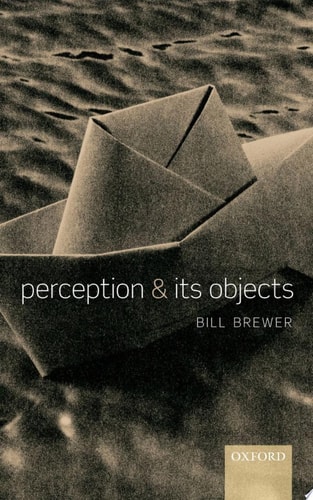
Perception and its Objects
0
0
As an Amazon Associate and affiliate partner, Menrva Books earns from qualifying purchases. Learn more
Author Description
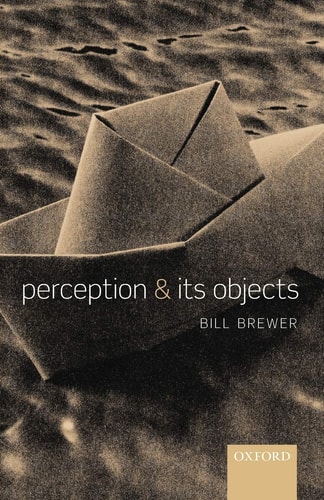
Bill Brewer presents, motivates, and defends a bold new solution to a fundamental problem in the philosophy of perception. What is the correct theoretical conception of perceptual experience, and how should we best understand the most fundamental nature of our perceptual relation with the physical objects in the world around us? Most theorists today analyse perception in terms of its representational content, in large part in order to avoid fatal problems attending the early modern conception of perception as a relation with particular mind-dependent objects of experience. Having set up the underlying problem and explored the lessons to be learnt from the various difficulties faced by opposing early modern responses to it, Bill Brewer argues that this contemporary approach has serious problems of its own. Furthermore, the early modern insight that perception is most fundamentally to be construed as a relation of conscious acquaintance with certain direct objects of experience is, he claims, perfectly consistent with the commonsense identification of such direct objects with persisting mind-independent physical objects themselves. Brewer here provides a critical, historical account of the philosophy of perception, in order to present a defensible vindication of empirical realism.
Menrva's Summary
THE THESIS
What is the correct theoretical conception of perceptual experience, and how should we best understand the nature of our perceptual relation with physical objects? Bill Brewer, a prominent philosopher, evaluates the limitations of contemporary representationalist theories of perception. He argues that the early modern insight—that perception is a direct relation of conscious acquaintance with objects—can be reconciled with the commonsense view that these objects are mind-independent physical entities. By critiquing historical and modern frameworks, Brewer seeks to provide a robust defense of empirical realism.
THE SCOPE MAP
What You Will Find
- A critical historical survey of early modern theories of perception.
- An analysis of the representational content model and its inherent logical difficulties.
- A defense of the direct realism framework regarding mind-independent objects.
- A systematic investigation into the relationship between conscious experience and physical reality.
THE AUTHORITY PERSPECTIVE
Philosophers and students of epistemology frequently cite this work as a significant contribution to the debate between representationalism and direct realism. Experts often note the technical rigor of Brewer's arguments, making it a foundational text for those studying the philosophy of perception.
Page Count:
224
Publication Date:
2011-05-08
Publisher:
Oxford University Press
ISBN-10:
0199260257
ISBN-13:
9780199260256
Philosophy
Metaphysics
Epistemology
Perception
Objectivity