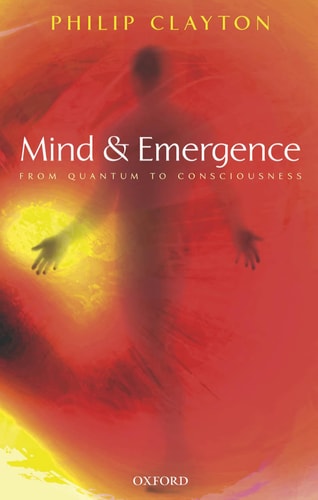
Mind and Emergence: From Quantum to Consciousness
0
0
As an Amazon Associate and affiliate partner, Menrva Books earns from qualifying purchases. Learn more
Author Description
Strong claims have been made for emergence as a new paradigm for understanding science, consciousness, and religion. Tracing the past history and current definitions of the concept, Clayton assesses the case for emergent phenomena in the natural world and their significance for philosophy and theology. Complex emergent phenomena require irreducible levels of explanation in physics, chemistry and biology. This pattern of emergence suggests a new approach to the problem of consciousness, which is neither reducible to brain states nor proof of a mental substance or soul. Although emergence does not entail classical theism, it is compatible with a variety of religious positions. Clayton concludes with a defence of emergentist panentheism and a Christian constructive theology consistent with the new sciences of emergence.
Menrva's Summary
THE THESIS
This book investigates whether the concept of emergence provides a viable framework for reconciling scientific findings with philosophical and theological inquiries into consciousness. Phillip Clayton, a philosopher and theologian, evaluates the historical development and contemporary definitions of emergence. He argues that complex phenomena in physics, chemistry, and biology necessitate irreducible levels of explanation, ultimately proposing a model of emergentist panentheism that remains consistent with modern scientific understanding.
THE SCOPE MAP
What You Will Find
- Historical analysis of the emergence concept from its origins to modern definitions
- Evaluation of irreducible levels of explanation across physics, chemistry, and biology
- Examination of the relationship between brain states and consciousness
- Defense of emergentist panentheism and its compatibility with Christian constructive theology
THE AUTHORITY PERSPECTIVE
Scholars and readers often note the high level of academic rigor required to engage with Clayton's synthesis of science and theology. Experts frequently cite this work as a significant contribution to the ongoing dialogue between naturalism and religious philosophy.
Page Count:
248
Publication Date:
2005-01-06
Publisher:
Oxford University Press
ISBN-10:
0199272522
ISBN-13:
9780199272525
Religion
Philosophy
Science
Physics
Philosophical theology
Theology
Consciousness
Community Tags
Similar Books