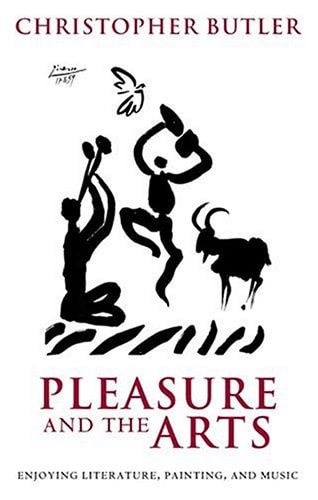
Pleasure and the Arts: Enjoying Literature, Painting, and Music
0
0
As an Amazon Associate and affiliate partner, Menrva Books earns from qualifying purchases. Learn more
Author Description
How do the arts give us pleasure? Covering a very wide range of artistic works, from Auden to David Lynch, Rembrandt to Edward Weston, and Richard Strauss to Keith Jarrett, Pleasure and the Arts offers us an explanation of our enjoyable emotional engagements with literature, music, and painting. The arts direct us to intimate and particularized relationships, with the people represented in the works, or with those we imagine produced them. When we listen to music, look at a purely abstract painting, or drink a glass of wine, can we enjoy the experience without verbalizing our response? Do our interpretative assumptions, our awareness of technique, and our attitudes to fantasy, get in the way of our appreciation of art, or enhance it? Examining these questions and more, we discover how curiosity drives us to enjoy narratives, ordinary jokes, metaphors, and modernist epiphanies, and how narrative in all the arts can order and provoke intense enjoyment. Pleasurable in its own right, Pleasure and the Arts presents a sparkling explanation of the enduring interest of artistic expression.
Menrva's Summary
THE THESIS
This book investigates the psychological and aesthetic mechanisms that allow human beings to derive pleasure from diverse forms of artistic expression. Christopher Butler, an established scholar in literary theory and aesthetics, utilizes a broad interdisciplinary framework to analyze how cognitive processes, cultural assumptions, and technical awareness interact with our sensory experiences. He argues that the arts function as a bridge to intimate, particularized relationships, suggesting that our engagement with narrative and form is fundamentally driven by curiosity and the human need for order.
THE SCOPE MAP
What You Will Find
- Comparative analysis of literature, painting, and music across various historical periods.
- Examination of the role of interpretative assumptions and technical knowledge in aesthetic appreciation.
- Discussion of the relationship between narrative structure and emotional response.
- Exploration of the tension between immediate sensory enjoyment and intellectual analysis.
THE AUTHORITY PERSPECTIVE
Critics and scholars frequently note the breadth of Butler's examples, which span from classical masters to contemporary figures. The text is recognized as a sophisticated exploration of aesthetic theory that remains accessible to those interested in the intersection of psychology and the arts.
Page Count:
256
Publication Date:
2004-11-11
Publisher:
Oxford University Press
ISBN-10:
0199272484
ISBN-13:
9780199272488
Art
Philosophy
Music
Non-Fiction
Literature
Painting history
English literature
Criticism history
English
Aesthetics
English & College Success
Community Tags
Similar Books