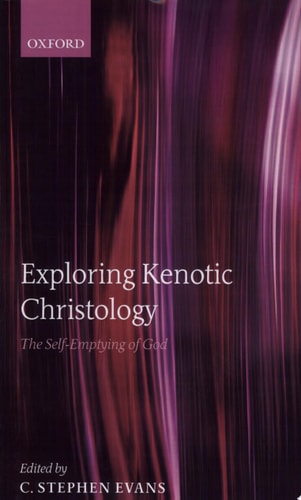
Exploring Kenotic Christology: The Self-Emptying of God
0
0
As an Amazon Associate and affiliate partner, Menrva Books earns from qualifying purchases. Learn more
Author Description
This book, written by a team of Christian philosophers, theologians, and biblical scholars, explores the viability of a kenotic account of the incarnation. It is an attempt to make sense of the traditional Christian claim that Jesus of Nazareth was both human and divine by developing the idea that to become human God the Son temporarily emptied himself of some of his divine attributes. Such a view of Jesus does full justice to the very human portraits of him found in the gospels, and it shows the depths of a divine love that is willing fully to embrace the human condition.
Menrva's Summary
THE THESIS
This book investigates the theological and philosophical viability of kenotic Christology as a coherent explanation for the incarnation of God as Jesus of Nazareth. C. Stephen Evans, alongside a collaborative team of philosophers and theologians, examines the traditional claim that the Son of God underwent a process of self-emptying to fully inhabit the human condition. The text utilizes a combination of biblical exegesis and analytical philosophy to argue that this model reconciles the divine nature of Christ with the historical, human portraits presented in the gospels.
THE SCOPE MAP
What You Will Find
- Philosophical analysis of divine attributes and the mechanics of the incarnation
- Exegetical examination of biblical passages regarding the self-emptying of God
- Interdisciplinary dialogue between systematic theology and contemporary philosophy
- Exploration of the ethical implications of divine love and human limitation
THE AUTHORITY PERSPECTIVE
Scholars and theologians identify this work as a significant contribution to contemporary Christological debates. Readers frequently note the academic density of the prose, which requires a foundational understanding of both analytic philosophy and Christian doctrine.
Page Count:
360
Publication Date:
2006-07-13
Publisher:
Oxford University Press
ISBN-10:
0199283222
ISBN-13:
9780199283224
Christology
Academic Theology
Jesus Christ
Christian Theology
Community Tags
Similar Books