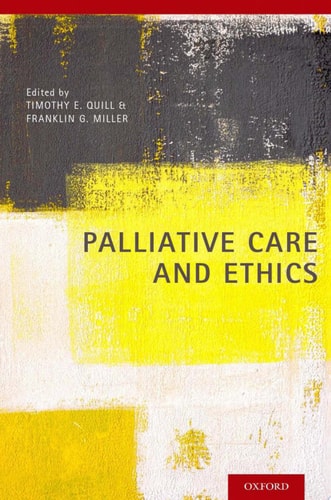
Palliative Care and Ethics
0
0
As an Amazon Associate and affiliate partner, Menrva Books earns from qualifying purchases. Learn more
Author Description
Hospice is the premiere end of life program in the United States, but its requirement that patients forgo disease-directed therapies and that they have a prognosis of 6 months or less means that it serves less than half of dying patients and often for very short periods of time. Palliative care offers careful attention to pain and symptom management, added support for patients and families, and assistance with difficult medical decision making alongside any and all desired medical treatments, but it does not include a comprehensive system of care as is provided by hospice. The practice of palliative care and hospice is filled with sometimes overt (requests for hastened death in an environment where such acts are legally prohibited) and other times covert (the delay in palliative care referral because the health care team believes it will undermine disease directed treatment) ethical issues.The contributors to this volume use a series of case presentations within each chapter to illustrate some of the palliative care and hospice challenges with significant ethical dimensions across the three overarching domains: 1) care delivery systems; 2) addressing the many dimensions of suffering; and 3) difficult decisions near the end of life. The contributors are among the most experienced palliative care, hospice and ethics scholars in North America and Western Europe. Each has been given relatively free reign to address what they feel are the most pressing ethical challenges within their domain, so a wide range of positions and vantage points are represented. As a result, the volume provides a very diverse ethical exploration of this relatively young field that can deepen, stretch, and at times confront any simple notion of the challenges facing patients, their families, professional caregivers, and policy makers.
Menrva's Summary
THE THESIS
This volume investigates the complex ethical dilemmas inherent in the practice of palliative care and hospice, questioning how medical systems can better balance symptom management with disease-directed treatments. Editors Franklin G. Miller and Timothy E. Quill curate a collection of essays from leading scholars in North America and Western Europe to examine the intersection of clinical care and moral philosophy. By utilizing case-based analysis, the authors address the systemic, psychological, and decision-making challenges that arise when treating patients near the end of life.
THE SCOPE MAP
What You Will Find
- Analysis of care delivery systems and the structural limitations of current hospice models.
- Examination of the multifaceted nature of patient suffering, including physical, emotional, and existential dimensions.
- Ethical frameworks for navigating difficult medical decisions, such as requests for hastened death and the timing of palliative referrals.
- Case study presentations that illustrate real-world applications of ethical theory in clinical settings.
THE AUTHORITY PERSPECTIVE
Experts recognize this volume as a significant contribution to the field of bioethics, noting its utility for both practitioners and policy makers. Readers frequently highlight the diversity of perspectives presented, which effectively challenges simplistic approaches to end-of-life care.
Page Count:
320
Publication Date:
2014-01-01
Publisher:
Oxford University Press
ISBN-10:
0199316686
ISBN-13:
9780199316687
Philosophy
Allied Health
Bioethics
Hospice
Medical
Medical Ethics
Terminal Care
Medicine
Community Tags
Other Editions(3)

Similar Books








Reader Comments
Share Your Thoughts
No comments yet. Be the first to share your thoughts!