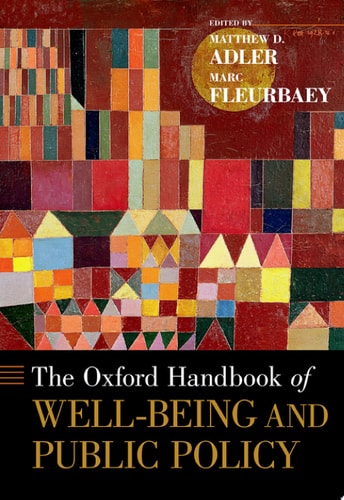
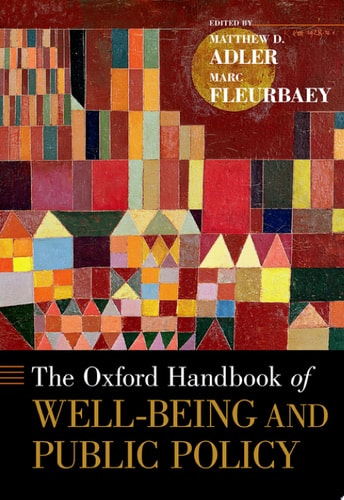
The Oxford Handbook of Well-Being and Public Policy
0
0
As an Amazon Associate and affiliate partner, Menrva Books earns from qualifying purchases. Learn more
Author Description
What are the methodologies for assessing and improving governmental policy in light of well-being? The Oxford Handbook of Well-Being and Public Policy provides a comprehensive, interdisciplinary treatment of this topic. The contributors draw from welfare economics, moral philosophy, and psychology and are leading scholars in these fields.The Handbook includes thirty chapters divided into four Parts. Part I covers the full range of methodologies for evaluating governmental policy and assessing societal condition-including both the leading approaches in current use by policymakers and academics (such as GDP, cost-benefit analysis, cost-effectiveness analysis, inequality and poverty metrics, and the concept of the "social welfare function"), and emerging techniques. Part II focuses on the nature of well-being. What, most fundamentally, determines whether an individual life is better or worse for the person living it? Her happiness? Her preference-satisfaction? Her attainment of various "objective goods"? Part III addresses the measurement of well-being and the thorny topic of interpersonal comparisons. How can we construct a meaningful scale of individual welfare, which allows for comparisons of well-being levels and differences, both within one individual's life, and across lives? Finally, Part IV reviews the major challenges to designing governmental policy around individual well-being.
Menrva's Summary
THE THESIS
This volume investigates the methodologies and ethical frameworks required to integrate individual well-being into the design and evaluation of public policy. Editors Marc Fleurbaey and Matthew D. Adler assemble a multidisciplinary team of scholars from economics, moral philosophy, and psychology to address the complexities of measuring societal progress. The text provides a rigorous examination of how governmental decisions can be optimized to improve the lives of citizens while navigating the limitations of traditional metrics like GDP.
THE SCOPE MAP
What You Will Find
- Comprehensive analysis of policy evaluation tools including cost-benefit analysis and social welfare functions.
- Philosophical inquiries into the nature of well-being, covering happiness, preference-satisfaction, and objective goods.
- Technical methodologies for interpersonal comparisons and the construction of welfare scales.
- Critical reviews of the practical challenges inherent in implementing well-being-focused governance.
THE AUTHORITY PERSPECTIVE
Experts identify this work as a foundational reference for academics and policymakers seeking to bridge the gap between welfare economics and moral philosophy. Readers frequently note the high level of academic density and the comprehensive nature of the contributions provided by the leading scholars in the field.
Page Count:
963
Publication Date:
2016-01-01
Publisher:
Oxford University Press
ISBN-10:
0199325839
ISBN-13:
9780199325832
Philosophy
Psychology
Economics
Cultural Anthropology
Social Science
Public Policy
Professional Career & Trade
Community Tags
Other Editions(3)
Similar Books