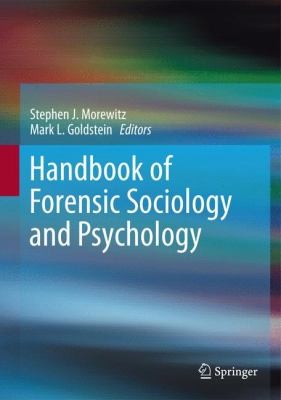
Handbook of Forensic Sociology and Psychology
0
0
As an Amazon Associate and affiliate partner, Menrva Books earns from qualifying purchases. Learn more
Author Description
Since their emergence as social sciences, psychology and sociology have found a natural home in the justice system. And while the term forensics often translates into CSI scenarios in the public imagination, the bulk of the work takes place in the courtroom, where lawyers, judges, and jurors rely on psychology and sociology experts for aid in decision making. The Handbook of Forensic Sociology and Psychology offers comprehensive, straightforward coverage of the impact of social science on the spectrum of civil and criminal legal issues. This unique reference guides readers through the work of professionals in both fields as expert witnesses, as consultants before and during trials, and in critiquing legal and law enforcement procedure. Offering expert insights into the making and breaking of laws, contributors analyze forensic psychology and sociology theories and methods used in areas as diverse as immigration, divorce and family, product liability, and employment and education related litigation. A range of evaluative procedures, from custody to competency, child abuse to the death penalty, is examined as well. Other topics featured in the Handbook include: The problem of interrogation-induced false confession. The role of the gang expert in court. Gender analysis in military court-martials. Sociological theory and methods in suicide litigation. Psychosocial theories about anger and their relevance in litigation. Neuropsychological testing standards and ethics. The Handbook of Forensic Sociology and Psychology opens out this increasingly important field for criminologists, and gives researchers in forensic psychology and sociology clear insights into challenges and opportunities facing these fields.
Menrva's Summary
THE THESIS
The intersection of social science and the justice system is explored through the lens of forensic sociology and psychology. This handbook provides comprehensive coverage of how psychology and sociology impact civil and criminal legal issues, moving beyond public perceptions of forensic science to focus on its role in the courtroom. It guides readers through the work of professionals in both fields, examining their contributions as expert witnesses, consultants, and critics of legal procedures. The book analyzes theories and methods applied to diverse areas such as immigration, family law, product liability, and employment litigation, as well as evaluative procedures like custody, competency, child abuse, and the death penalty.
THE SCOPE MAP
- The problem of interrogation-induced false confession.
- The role of the gang expert in court.
- Gender analysis in military court-martials.
- Sociological theory and methods in suicide litigation.
- Psychosocial theories about anger and their relevance in litigation.
- Neuropsychological testing standards and ethics.
- Analysis of forensic psychology and sociology theories and methods in immigration, divorce, product liability, and employment litigation.
THE AUTHORITY PERSPECTIVE
This handbook is positioned as a crucial reference for criminologists and researchers in forensic psychology and sociology, offering clear insights into the challenges and opportunities within these increasingly important fields. It aims to provide straightforward coverage of the impact of social science on legal issues, serving professionals who act as expert witnesses and consultants. The collection of topics suggests a detailed examination of practical applications and theoretical underpinnings relevant to legal decision-making. The scope covers a wide range of legal contexts, from criminal interrogations to family law and military proceedings.
Page Count:
466
Publication Date:
2013-01-01
ISBN-10:
146147177X
ISBN-13:
9781461471776
Philosophy
Non-Fiction
Psychology
Crime
Criminology
Forensic Psychology
Expert Witness
Sociology
Forensic sociology
Law
Community Tags
Similar Books