Aristophanes' Frogs: Oxford Approaches to Classical Literature
0
0
As an Amazon Associate and affiliate partner, Menrva Books earns from qualifying purchases. Learn more
Author Description
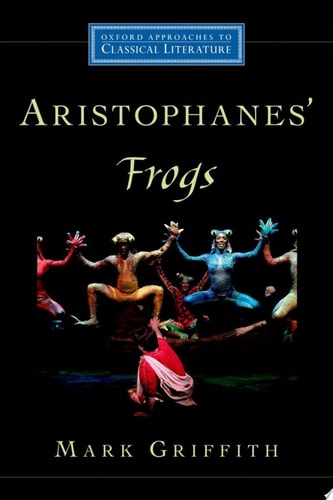
Aristophanes is widely credited with having elevated the classical art of comedy to the level of legitimacy and recognition that only tragedy had hitherto achieved, and producing some of the most intriguing works of literature to survive from classical Greece in the process. Among them, Frogs has a unique appeal; written and performed in 405 BCE, the comedy won first prize in that year's Lenaea festival competition and was re-performed soon thereafter--a rare occurrence for comedies at the time. Frogs has been admired and quoted by readers and critics ever since, a testament to its timeless appeal; it remains among the most approachable of Aristophanes' plays, as well as perhaps the richest of all in insights it provides into ancient Greek cultural attitudes and values.Mark Griffith's study of the Frogs is the first single book to offer a reliable and sophisticated account of this play in light of modern notions of culture, performance, democracy, religion, and aesthetics. After placing the work in its original historical, cultural, and biographical context, Griffith goes on to underscore the originality of Frogs in relation to parallel developments in the tragedies of Aeschylus and Euripides, among others. He highlights the play's unique portrayal of the figure of Dionysus, the Eleusinian mystery cult, and the question of life after death. This title provides not only a detailed analysis of the play and a concise account of its reception, but also a succinct introduction to ancient Greek comedy, exploring the extraordinary range of theatrical conventions, moral and aesthetic assumptions, and religious beliefs that underlie the action of Aristophanes' play. The book provides an invaluable companion to Aristophanes and the theater of classical Greece for students and general readers alike.
Menrva's Summary
THE THESIS
*This study investigates the enduring cultural and aesthetic significance of Aristophanes' play Frogs within the context of ancient Athenian society.* Mark Griffith, a scholar of classical literature, utilizes historical, biographical, and performance-based data to analyze the play's unique position in Greek comedy. He argues that the work serves as a critical lens for understanding the interplay between democracy, religion, and the evolving theatrical conventions of the fifth century BCE. By comparing the play to the works of Aeschylus and Euripides, Griffith provides a framework for evaluating the intellectual climate of classical Greece.
THE SCOPE MAP
What You Will Find
- Historical and cultural context of the Lenaea festival in 405 BCE
- Comparative analysis of Aristophanic comedy versus classical tragedy
- Examination of the Eleusinian mystery cult and afterlife beliefs
- Discussion of the theatrical portrayal of Dionysus and democratic values
THE AUTHORITY PERSPECTIVE
Experts recognize this work as a foundational text for students and scholars seeking a sophisticated introduction to Aristophanic comedy. Readers frequently note the clarity of the prose, which effectively bridges the gap between academic rigor and accessibility for general audiences.
Page Count:
307
Publication Date:
2013-01-01
Publisher:
Oxford University Press
ISBN-10:
019933949X
ISBN-13:
9780199339495
History
Drama
Aristophanes
Ancient History
English & College Success
Theater History
English
Literary Criticism
Community Tags
Similar Books