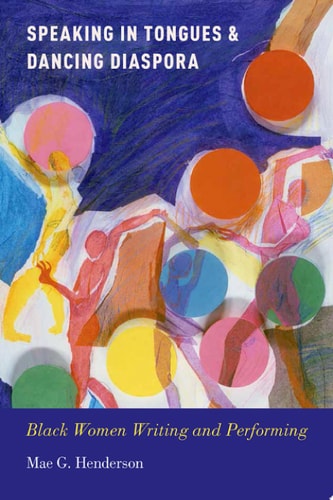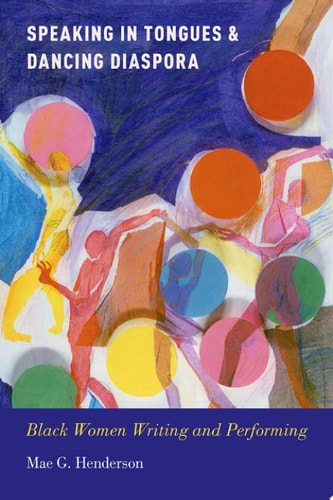
Speaking in Tongues and Dancing Diaspora: Black Women Writing and Performing
0
0
As an Amazon Associate and affiliate partner, Menrva Books earns from qualifying purchases. Learn more
Author Description
The oral tradition has always played an important role in African American literature, ranging from works such as Zora Neale Hurston's Their Eyes Were Watching God to Toni Morrison's Beloved. These and countless other novels affirm the power of sonance and sound in the African American literary canon. Considering the wide swath of work in this powerful lineage -- in addition to its shared heritage with performance -- Mae G. Henderson deploys her trope of "speaking in tongues" to theorize the preeminence of voice and narration in black women's literary performance through her reconstruction of a fundamentally spiritual practice as a critical concept for reading black women's writing dialogically and intertextually.The first half of the book is devoted to influential works of fiction, as Henderson offers a series of spirited, attentive readings of works by Zora Neale Hurston, Alice Walker, Sherley Anne Williams, Toni Morrison, Gayl Jones, and Nella Larsen. The second half shifts gears to consider the world of female African American performance, most notably in the figures of Josephine Baker and the video dancer. Drawing on the trope of "dancing diaspora," Henderson proposes a model of theorizing based on "performing testimony" and "critical witnessing." Throughout the book, Henderson draws on a history of black women not only in the Pentecostal Holiness Church, but also within the traditions of classical, Christian, African, and black diasporic spirituality and performance. Ultimately, Speaking in Tongues and Dancing Diaspora provides a deeply felt reflection on race and gender and their effects within the discourses of speaker/listener and audience/performer.
Menrva's Summary
THE THESIS
This work investigates how the oral tradition and performance practices serve as foundational elements in the literary and cultural expressions of Black women. Mae G. Henderson, a scholar of African American literature, utilizes the tropes of "speaking in tongues" and "dancing diaspora" to construct a theoretical framework for analyzing voice and narration. By examining the intersection of spiritual practices and literary performance, she argues for a dialogic and intertextual approach to reading works by prominent Black female authors and performers.
THE SCOPE MAP
What You Will Find
- Analysis of literary works by Zora Neale Hurston, Alice Walker, Toni Morrison, and Nella Larsen.
- Examination of performance art through figures such as Josephine Baker and the contemporary video dancer.
- Theoretical models of "performing testimony" and "critical witnessing" as tools for cultural analysis.
- Historical context regarding the influence of the Pentecostal Holiness Church and broader African diasporic spiritual traditions.
THE AUTHORITY PERSPECTIVE
Scholars and critics recognize this text as a significant contribution to the study of African American literary performance and gendered discourse. Readers frequently note the academic density of the prose and the author's ability to bridge the gap between written literature and live performance.
Page Count:
336
Publication Date:
2014-01-01
Publisher:
Oxford University Press
ISBN-10:
0199375208
ISBN-13:
9780199375202
Performance Studies
Literary Criticism
English
English & College Success