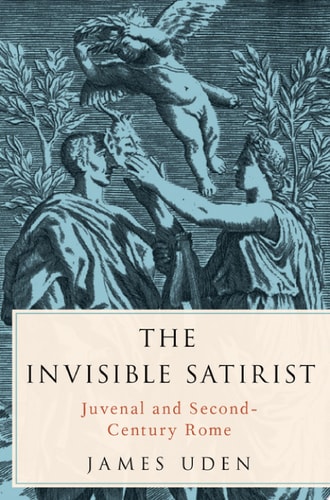
The Invisible Satirist: Juvenal and Second-Century Rome
0
0
As an Amazon Associate and affiliate partner, Menrva Books earns from qualifying purchases. Learn more
Author Description
The Invisible Satirist offers a fresh new reading of the Satires of Juvenal, rediscovering the poet as a smart and scathing commentator on the cultural and political world of second-century Rome. Breaking away from the focus in recent scholarship on issues of genre, this study situates Juvenal's Satires within the context of the politics, oratory, and philosophy of Rome under Trajan and Hadrian. In particular, the book shows how Juvenal offers a distinctively Roman response to the Greek sophists and philosophers of the so-called "Second Sophistic." Whereas earlier studies argued for the satirist's adoption of an ironic persona in his poems, this book stresses the absence of any guiding, coherent first-person voice in his work, emphasizing instead the poems' plurality of voices and thematic preoccupation with performance and disguise. These sprawling rhetorical texts, intricately constructed but deliberately lacking any strong personal voice, ultimately communicate a sense of rootlessness and loss of identity-a sense of being invisible-within the cosmopolitan second-century world. The book will appeal to students and scholars of Roman satire, Imperial Roman culture, and Second Sophistic literature.
Menrva's Summary
THE THESIS
This study investigates how the Satires of Juvenal function as a complex, multi-vocal critique of the cultural and political landscape of second-century Rome. James Uden, a scholar of classical literature, challenges traditional interpretations that view Juvenal through the lens of a singular, ironic persona. Instead, he argues that the poems reflect a deliberate absence of a coherent first-person voice, positioning the work as a response to the intellectual climate of the era under Trajan and Hadrian.
THE SCOPE MAP
What You Will Find
- Analysis of the intersection between Juvenal's Satires and the political oratory of the Roman Empire.
- Examination of the cultural tensions between Roman identity and the Greek influence of the Second Sophistic.
- A methodological shift away from genre-focused scholarship toward thematic analysis of performance and disguise.
- Exploration of the concept of invisibility and identity loss within the cosmopolitan environment of the second century.
THE AUTHORITY PERSPECTIVE
Scholars recognize this work as a significant departure from established readings of Juvenal, particularly for its focus on the lack of a unified poetic voice. The text is noted for its academic rigor and its utility for those studying the intellectual history of the Roman Imperial period.
Page Count:
272
Publication Date:
2014-01-01
Publisher:
Oxford University Press
ISBN-10:
0199387281
ISBN-13:
9780199387281
Poetry
History
Literary Criticism
Ancient History
English
English & College Success
Juvenal
Community Tags
Similar Books