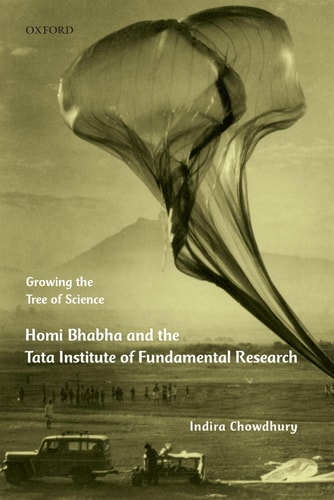
Growing the Tree of Science: Homi Bhabha and the Tata Institute of Fundamental Research
0
0
As an Amazon Associate and affiliate partner, Menrva Books earns from qualifying purchases. Learn more
Author Description
How does a premier institute of science come into being? How does it foster a culture promoting free thinking and original research? What impact do the policies of a newly independent nation have on the way it functions? Exploring such themes and analysing the dissonances between institutional records and individual recollections, this book narrates the unique history of the Tata Institute of Fundamental Research (TIFR), Mumbai.Acutely aware that a scientific temper had not been nurtured in colonial India, Cambridge-trained physicist Homi Bhabha, who later came to be known as the architect of India's atomic energy programme, wished to plant the tree of science on Indian soil. Thus was born TIFR on 19 December 1945. What followed were years of dynamic growth and struggle during which some of the best minds from across the world worked as well as taught at the institute.Using both archival documents and detailed interviews, Growing the Tree of Science blends history and memory to reinterpret institutional legacy by moving beyond Bhabha's individual efforts and bringing to light the role of younger scientists during the formative years of TIFR. In the process emerges a fascinating account in which personal connections, novel forms of philanthropy, art and architecture, and international training networks, all come together in creating a vibrant culture of science at TIFR.
Menrva's Summary
THE THESIS
This book investigates the origins and cultural development of the Tata Institute of Fundamental Research (TIFR) as a case study for establishing scientific infrastructure in a post-colonial nation. Indira Chowdhury, an experienced historian and archivist, utilizes a combination of institutional records and oral history interviews to examine the vision of Homi Bhabha. The work argues that the institute's success was not merely the result of Bhabha's individual leadership, but a complex synthesis of international collaboration, philanthropic support, and the contributions of a younger generation of scientists.
THE SCOPE MAP
What You Will Find
- The historical timeline of TIFR from its founding in 1945 through its formative years of growth.
- Analysis of the intersection between national policy, scientific research, and institutional culture.
- Primary source evidence derived from archival documents and detailed personal interviews.
- Exploration of the role of art, architecture, and international networks in fostering a scientific environment.
THE AUTHORITY PERSPECTIVE
Scholars and historians of science recognize this work as a significant contribution to the understanding of institutional development in post-independence India. Readers frequently note the balance between formal archival research and the inclusion of personal narratives, which provides a comprehensive view of the institute's legacy.
Page Count:
320
Publication Date:
2016-08-01
Publisher:
Oxford University Press
ISBN-10:
0199466904
ISBN-13:
9780199466900
History
Science
Biography
Institutional History
India
Community Tags
Similar Books