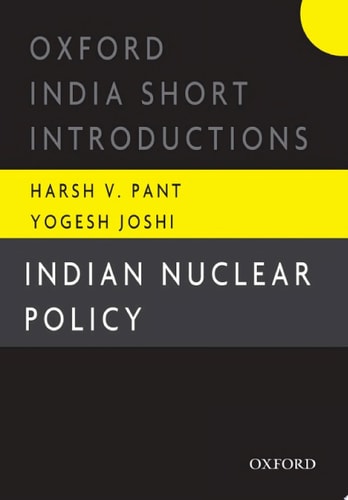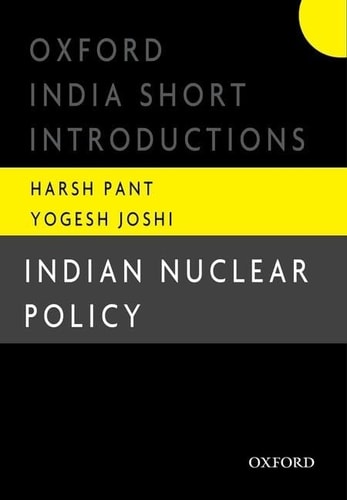
Indian Nuclear Policy: Oxford India Short Introductions
0
0
As an Amazon Associate and affiliate partner, Menrva Books earns from qualifying purchases. Learn more
Author Description
India's first Prime, Minister Jawaharlal Nehru, laid the foundations of an elaborate atomic energy program in 1948, just a year after India's independence. Yet, it took Indian decision-makers more than 50 years to declare the country a nuclear-weapon state in May 1998. Once India crossed the nuclear rubicon, it has managed to transform itself into a major nuclear power. This short introduction provides a clear and succinct account of the evolution of Indian nuclear policy over seven decades since Independence. Situating India's nuclear behaviour in its quest for global status, demands of national security, vagaries of domestic politics and the idiosyncrasies of the individuals who led its nuclear program, it explains how India's engagement with the atom is unique in international nuclear history and politics.Utilizing the recently declassified archival documents and oral history interviews, the five chapters follow a linear historical narrative explaining how India's nuclear pioneers established the nuclear program after independence; India's development of a 'nuclear weapons option after the Chinese nuclear test of 1964; its nuclear refrain after the 1974 PNE; its pathways to nuclearisation in the decade of 1980s and 1990s; and finally its rise as a nuclear weapons power after the 1998 nuclear test.
Menrva's Summary
THE THESIS
This book investigates the historical trajectory and strategic motivations behind India's transition from an atomic energy program to a declared nuclear-weapon state. Authors Harsh V. Pant and Yogesh Joshi, both experts in international relations and security studies, synthesize archival data and oral histories to explain the complex interplay between national security, global status, and domestic political pressures. The text provides a structured framework for understanding how India's unique nuclear path evolved over seven decades.
THE SCOPE MAP
What You Will Find
- Historical analysis of India's nuclear program from 1948 to the present.
- Examination of the impact of the 1964 Chinese nuclear test and the 1974 PNE on Indian policy.
- Utilization of recently declassified archival documents and primary source oral history interviews.
- A five-chapter linear narrative detailing the progression toward nuclearization and the rise of India as a nuclear power.
THE AUTHORITY PERSPECTIVE
Experts and scholars in the field of South Asian security studies recognize this work as a concise and accessible primer on the subject. Readers frequently note the clarity of the prose, which effectively distills complex geopolitical developments into a manageable format for students and policy observers alike.
Page Count:
218
Publication Date:
2018-11-27
Publisher:
Oxford University Press
ISBN-10:
0199489025
ISBN-13:
9780199489022
History
International relations
Nuclear weapons
India
Nuclear Policy
Community Tags
Similar Books