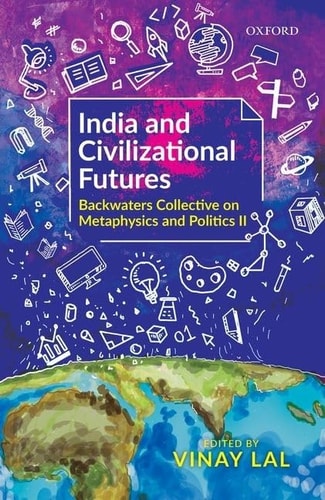
India and Civilizational Futures: Papers from the Backwaters Collective on Metaphysics and Politics II
0
0
As an Amazon Associate and affiliate partner, Menrva Books earns from qualifying purchases. Learn more
Author Description
India and Civilizational Futures is the second volume to emerge from the deliberations of the Backwaters Collective on Metaphysics and Politics, a group comprised largely of Indian scholars, writers, and intellectuals that was formed in late 2010 with the intent of considering how the intellectual and cultural resources of Indic civilization, and more broadly the Global South, might be deployed to introduce incommensurability and greater plurality into the world of modern knowledge systems. The members and friends of the Collective are animated by various passions: though some are interested in the decolonization of the university and in exploring other sites of learning, and others wish to put into serious question the most familiar categories that have informed humanistic inquiry and social science research, they are united both in their quest to engender an ecological plurality of knowledges and reinitiate metaphysics into the discourses of politics. The authors of the papers in this volume offer perspectives on India's past and intellectual traditions that suggest how we might liberate ourselves from the straightjackets of history, development, normal politics, the nation-state, and what globally passes for 'common sense' in various spheres of life and thought.
Menrva's Summary
THE THESIS
This volume investigates how the intellectual and cultural resources of Indic civilization can be utilized to challenge dominant Western knowledge systems and introduce greater plurality into global discourse. Vinay Lal, a Professor of History and Asian-American Studies at UCLA, curates this collection of papers from the Backwaters Collective on Metaphysics and Politics. The contributors utilize historical analysis and metaphysical inquiry to critique modern paradigms of development, the nation-state, and conventional social science research. The primary argument posits that reintroducing metaphysical perspectives into political discourse is necessary to liberate humanistic inquiry from restrictive, Eurocentric frameworks.
THE SCOPE MAP
What You Will Find
- Critical analysis of modern knowledge systems and the decolonization of the university.
- Explorations of Indic intellectual traditions as alternatives to Western political categories.
- Theoretical frameworks for reinitiating metaphysics into contemporary political discourse.
- Critiques of the nation-state, development, and global common sense.
THE AUTHORITY PERSPECTIVE
Scholars and readers in the field of postcolonial studies identify this work as a significant contribution to the ongoing debate regarding the plurality of global knowledge systems. The text is noted for its dense, academic prose that demands a high level of engagement with both Indian history and political philosophy.
Page Count:
336
Publication Date:
2019-12-31
Publisher:
Oxford University Press
ISBN-10:
0199499063
ISBN-13:
9780199499069
History
Philosophy
India
Sociology
Community Tags
Similar Books