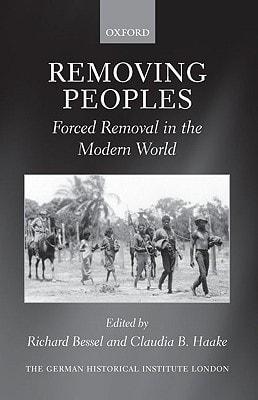
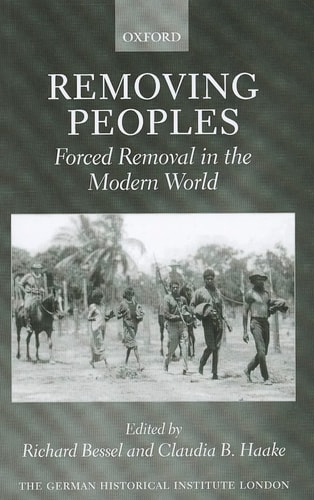
Removing Peoples: Forced Removal in the Modern World
0
0
As an Amazon Associate and affiliate partner, Menrva Books earns from qualifying purchases. Learn more
Author Description
One of the terrible and tragic themes of modern history is the forced removal of millions of human beings. Scarcely a corner of the world has been spared the violence of the forced removal of people from their homes for political, economic, "racial," religious, or cultural reasons. The causes, course, and consequences of the removal of peoples from their homes form a central theme in the history of the modern world. While removing people from their homes by force did not begin suddenly in the nineteenth century, the combination of the development of a global (capitalist) economy, of modern race-thinking, of world wars, of the triumph of popular and national sovereignty, and of new technological means of physically uprooting and transporting peoples has given this phenomenon a quantitatively and qualitatively new character. Removal has been a global phenomenon, and therefore this volume treats it within the frame of world history and international comparison. Examples discussed range from the United States in the 1830s to the expulsion of pied noir settlers from Algeria in the 1960s. A number of factors reshaped the older practices of forced migration and helped to make the removals discussed in this volume distinctly "modern." These include the use of modern apparatuses of administration, communication, and coercion, as well as warfare based on modern technology and organization. When it became possible to remove human beings on a massive scale, people may have started to consider doing just that--and especially so in crises connected to war, colonization, or decolonization, as the studies assembled in this volume demonstrate.
Menrva's Summary
THE THESIS
This volume investigates the historical evolution and modern intensification of forced population displacement as a global phenomenon driven by political, economic, and ideological factors. Editors Claudia B. Haake and Richard Bessel assemble a collection of scholarly studies that examine how the rise of the modern nation-state, global capitalism, and advanced administrative technologies transformed the scale and nature of forced removals. The text argues that while displacement is not a new practice, the twentieth century introduced a qualitatively distinct character to these events through the application of state-sponsored coercion and industrial-scale logistics.
THE SCOPE MAP
What You Will Find
- Comparative analysis of forced migration events from the 1830s United States to 1960s Algeria.
- Examination of the role of modern administrative apparatuses and communication networks in facilitating mass displacement.
- Discussion of the intersection between national sovereignty, race-thinking, and decolonization.
- Case studies detailing the impact of war and economic crises on the systematic removal of populations.
THE AUTHORITY PERSPECTIVE
Scholars and historians recognize this volume as a significant contribution to the comparative study of state-sponsored violence and migration. The text is noted for its rigorous academic approach and its ability to synthesize diverse historical contexts into a cohesive framework regarding the mechanics of modern displacement.
Page Count:
480
Publication Date:
2009-08-10
Publisher:
OUP/German Historical Institute London
ISBN-10:
0199561958
ISBN-13:
9780199561957
History
Human rights
Race Relations
Sociology
Migration Studies
Modern History
Globalization
Community Tags
Other Editions(2)
Similar Books