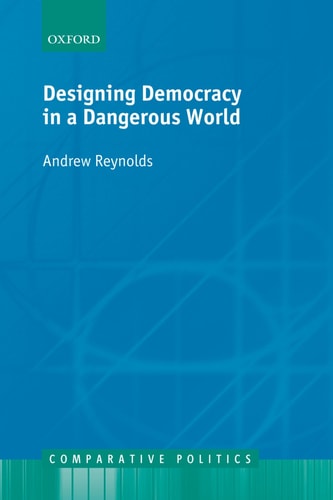
Designing Democracy in a Dangerous World
0
0
As an Amazon Associate and affiliate partner, Menrva Books earns from qualifying purchases. Learn more
Author Description
Designing Democracy in a Dangerous World addresses a question at the heart of contemporary global politics: how does one craft democracy in fragile and divided states? In Iraq and Afghanistan, spiraling conflict was driven in large part by the mistakes of institutional design in the immediate post-conflict period. The future hopes for peace and stability in those, and other cases, rest on a well designed political system which can bring legitimacy to elected leaders and offer reassurances to minorities.Designing Democracy in a Dangerous World fills gaps in knowledge in three ways. First, it develops a theoretical framework for assessing what type of democracy will best serve a nation. Second, it offers a behind the scenes look at the intricacies of democratic design in a number of focus cases. Third, the book pulls together lessons for policymakers by surveying patterns of success and failure over the last forty years. Reynolds tests his framework by drawing on extensive quantitative and qualitative evidence, gathering data from 66 cases to analyze the relationship between democracy and stability and a nation's demographic, socio-political, historical, and economic features, and previous levels of instability. To this mix are added institutional variables: electoral systems, decentralization, levels of executive inclusion, and executive type. For a qualitative focus the book draws on the author's experience as a constitutional adviser during the last fifteen years in democratizing nations such as South Africa, Afghanistan, Sierra Leone, Burma, Lebanon, Sudan, and Iraq.There are very few places in the world today where the majority of people do not desire some degree of choice, accountability over their leaders, and the rule of law. The key is to craft a democracy that is home grown and appropriate to a given society. By bringing new evidence and arguments to bear on the topic of promoting democracy, Designing Democracy in a Dangerous World contributes to both foreign policy and academic debates.Comparative Politics is a series for students, teachers, and researchers of political science that deals with contemporary government and politics. Global in scope, books in the series are characterised by a stress on comparative analysis and strong methodological rigour. The series is published in association with the European Consortium for Political Research. For more information visit: www.essex.ac.uk/ecprThe Comparative Politics Series is edited by Professor David M. Farrell, School of Politics and International Relations, University College Dublin, Kenneth Carty, Professor of Political Science, University of British Columbia, and Professor Dirk Berg-Schlosser, Institute of Political Science, Philipps University, Marburg.
Menrva's Summary
THE THESIS
How can political institutions be effectively crafted to foster stability and legitimacy in fragile, divided, or post-conflict states? Andrew Reynolds, a seasoned constitutional adviser with extensive field experience in nations such as Iraq, Afghanistan, and South Africa, investigates the intersection of institutional design and democratic success. He presents a comprehensive framework that evaluates how electoral systems, decentralization, and executive structures influence long-term political stability, arguing that democracy must be tailored to the specific socio-political and historical context of each nation to be sustainable.
THE SCOPE MAP
What You Will Find
- A comparative analysis of 66 distinct cases of democratization over the last forty years.
- A theoretical framework for assessing the viability of different democratic models in divided societies.
- Quantitative data correlating institutional variables like electoral systems and executive inclusion with national stability.
- Qualitative insights derived from the author's direct involvement as a constitutional adviser in conflict-prone regions.
THE AUTHORITY PERSPECTIVE
Experts recognize this work as a significant contribution to the field of comparative politics, particularly for its integration of large-scale quantitative data with nuanced, on-the-ground constitutional experience. Readers frequently note that the text serves as a practical resource for policymakers and scholars seeking to understand the mechanics of state-building in volatile environments.
Page Count:
210
Publication Date:
2010-10-28
Publisher:
Oxford University Press
ISBN-10:
019959449X
ISBN-13:
9780199594498
Government
International relations
Comparative Politics
Public Policy
Democracy
Community Tags
Other Editions(2)
Similar Books


Reader Comments
Share Your Thoughts
No comments yet. Be the first to share your thoughts!