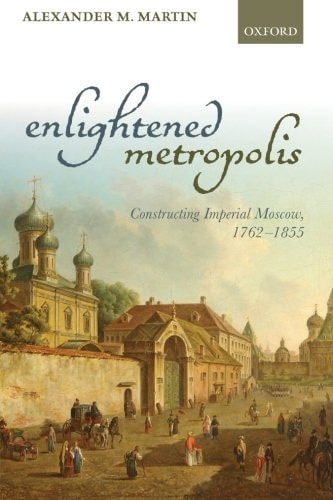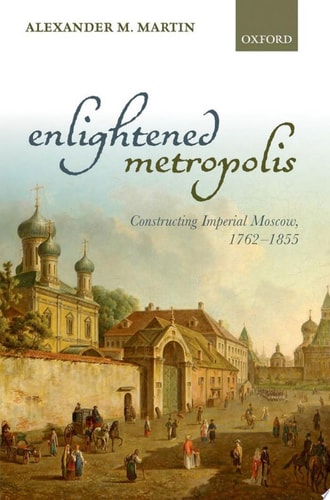
Enlightened Metropolis: Constructing Imperial Moscow, 1762-1855
0
0
As an Amazon Associate and affiliate partner, Menrva Books earns from qualifying purchases. Learn more
Author Description
Imperial Russia, is was said, had two capital cities because it had two identities: St. Petersburg was Russia's "window to Europe," whereas Moscow preserved the nation's proud historical traditions. Enlightened Metropolis challenges this myth by exploring how the tsarist regime actually tried to turn Moscow into a bridgehead of Europe in the heartland of Russia.Moscow in the eighteenth century was widely scorned as backward and "Asiatic." The tsars thought it a benighted place that endangered their state's internal security and their effort to make Russia European. Beginning with Catherine the Great, they sought to construct a new Moscow, with European buildings and institutions, a Westernized "middle estate", and a new cultural image as an enlightened metropolis. Drawing on the methodologies of urban, social, institutional, cultural, and intellectual history, Enlightened Metropolis asks: How was the urban environment - buildings, institutions, streets, smells - transformed in the nine decades from Catherine's accession to the death of Nicholas I? How were the lives of the inhabitants changed? Did a "middle estate" come into being? How similar was Moscow's modernization to that of Western cities, and how was it affected by the disastrous occupation by Napoleon? Lastly, how were Moscow and its people imagined by writers, artists, and social commentators in Russia and the West from the Enlightenment to the mid-nineteenth century?
Menrva's Summary
THE THESIS
This book investigates the deliberate transformation of Moscow from a perceived 'Asiatic' backwater into a modernized, European-style metropolis under the tsarist regime between 1762 and 1855. Alexander M. Martin, a scholar of Russian history, utilizes a multidisciplinary approach to analyze how the state attempted to reshape the city's physical infrastructure, social hierarchy, and cultural identity. By examining the period from Catherine the Great to Nicholas I, the author argues that Moscow served as a critical site for the state's broader project of Westernization. The work synthesizes urban planning, institutional development, and intellectual discourse to challenge the traditional dichotomy between St. Petersburg and Moscow.
THE SCOPE MAP
What You Will Find
- Analysis of urban planning and architectural development in Moscow from 1762 to 1855.
- Investigation into the formation of a 'middle estate' and shifting social structures within the city.
- Evaluation of the impact of the Napoleonic occupation on Moscow's modernization efforts.
- Examination of how writers, artists, and social commentators constructed the image of Moscow during the Enlightenment and the early nineteenth century.
THE AUTHORITY PERSPECTIVE
Historians and scholars of Russian studies frequently cite this work as a significant contribution to the understanding of urban development in the Russian Empire. Readers often note the academic density of the prose and the author's meticulous use of primary sources to support his arguments regarding state-led modernization.
Page Count:
352
Publication Date:
2013-05-19
Publisher:
Oxford University Press
ISBN-10:
0199605785
ISBN-13:
9780199605781
History
Social History
Cultural History
Russian History
Urban History
European History