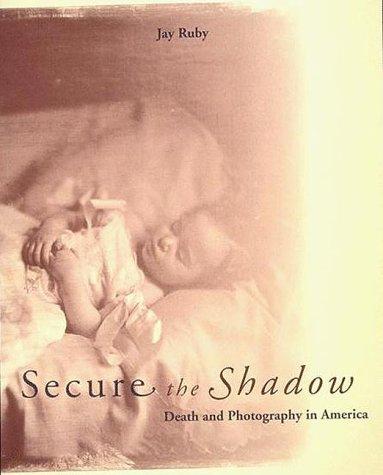
Secure the Shadow
0
0
As an Amazon Associate and affiliate partner, Menrva Books earns from qualifying purchases. Learn more
Author Description
Death and the way society comes to terms with it have become a major area of scholarly and popular interest, as evidenced in the work of such well-known figures as Philippe Aries and Elisabeth Kubler-Ross. Photographs and other forms of pictorial imagery play an important role in these investigations. Secure the Shadow is an original contribution that lies at the intersection of cultural anthropology and visual analysis, a field that Jay Ruby's previous writings have helped to define. It explores the photographic representation of death in the United States from 1840 to the present, focusing on the ways in which people have taken and used photographs of deceased loved ones and their funerals to mitigate the finality of death. Sometimes thought to be a bizarre Victorian custom, photographing corpses has been and continues to be an important, if not recognized, occurrence in American life. It is a photographic activity, like the erotica produced in middle-class homes by married couples, that many privately practice but seldom circulate outside the trusted circle of close friends and relatives. Along with tombstones, funeral cards, and other images of death, these photographs represent one way in which Americans have attempted to secure their shadows. Ruby employs newspaper accounts, advertisements, letters, photographers' account books, interviews, and other material to determine why and how photography and death became intertwined in the nineteenth century. He traces this century's struggle between America's public denial of death and a deeply felt private need to use pictures of those we love to mourn their loss. Ruby compares photographs and other pictorial media of death, founding his interpretations on the discovery of patterns in the appearance of the images and a reconstruction of the conditions of their production and utilization.
Menrva's Summary
THE THESIS
This book investigates the historical and cultural significance of photographic representations of death in the United States. Jay Ruby, a pioneer in the field of visual anthropology, examines how Americans have used photographs of deceased loved ones and funerals from 1840 to the present day to cope with mortality. Drawing on a wide array of sources including newspaper accounts, advertisements, letters, and photographers' records, Ruby explores the complex relationship between public denial of death and the private need for visual mementos. The work analyzes patterns within these images and reconstructs the contexts of their creation and use to understand this enduring practice.
THE SCOPE MAP
- The photographic representation of death in the United States from 1840 to the present.
- The use of photographs of deceased loved ones and funerals as a means to mitigate the finality of death.
- Historical analysis of corpse photography, often misconstrued as a purely Victorian custom.
- Examination of private photographic practices that are seldom circulated publicly.
- Comparison of photographs and other pictorial media of death.
- Interpretation based on patterns in image appearance and the conditions of their production and utilization.
- The tension between public denial of death and private mourning through images.
THE AUTHORITY PERSPECTIVE
This book is recognized as a significant contribution to the intersection of cultural anthropology and visual analysis, particularly in its exploration of death studies. Scholars have noted its original approach in examining the photographic representation of death in American life. The work is valued for its detailed historical research and its insightful analysis of how visual imagery has been employed to process grief and mortality. It offers a nuanced perspective on a practice often misunderstood, highlighting its persistent role in American culture.
Page Count:
232
Publication Date:
1999-01-01
ISBN-10:
0262681099
ISBN-13:
9780262681094
Non-Fiction
Art
History
Death Studies
PHOTOGRAPHY History
American Studies
Cultural Anthropology
Visual Culture
Community Tags
Similar Books