American Modernism and Depression Documentary
0
0
As an Amazon Associate and affiliate partner, Menrva Books earns from qualifying purchases. Learn more
Author Description
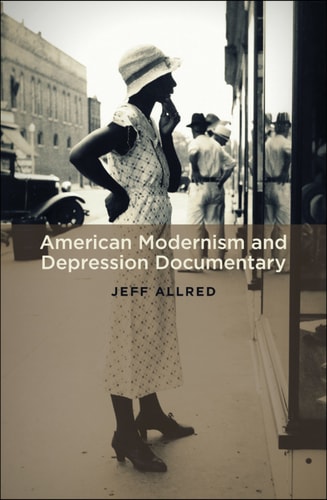
Photos filled with the forlorn faces of hungry and impoverished Americans that came to characterize the desolation of the Great Depression are among the best known artworks of the twentieth century. Captured by the camera's eye, these stark depictions of suffering became iconic markers of a formative period in U.S. history. Although there has been an ample amount of critical inquiry on Depression-era photographs, the bulk of scholarship treats them as isolated art objects. And yet they were often joined together with evocative writing in a genre that flourished amid the period, the documentary book. American Modernism and Depression Documentary looks at the tradition of the hybrid, verbal-visual texts that flourished during a time when U.S. citizens were becoming increasingly conscious of the life of a larger nation. Jeff Allred draws on a range of seminal works to illustrate the convergence of modernism and documentary, two forms often regarded as unrelated. Whereas critics routinely look to James Agee and Walker Evans' Let Us Now Praise Famous Men as the sole instance of the modernist documentary book, Allred turns to such works as Richard Wright's scathing 12 Million Black Voices, and the oft-neglected You Have Seen Their Faces by Erskine Caldwell and Margaret Bourke-White to open up the critical playing field. And rather than focusing on the ethos of Progressivism and/or the politics and aesthetics of the New Deal, Allred emphasizes the centrality of Life magazine to the consolidation of a novel cultural form.
Menrva's Summary
THE THESIS
This book investigates the intersection of modernist aesthetics and documentary practices within the hybrid, verbal-visual texts produced during the Great Depression. Jeff Allred, an academic specializing in American literature and culture, challenges the traditional view that treats Depression-era photography as isolated art objects. By analyzing the convergence of literature and photography, Allred argues that these documentary books were central to shaping a new national consciousness and cultural form, moving beyond the standard focus on New Deal politics or Progressivism.
THE SCOPE MAP
What You Will Find
- Analysis of hybrid verbal-visual texts from the 1930s and 1940s.
- Examination of the influence of Life magazine on the consolidation of documentary forms.
- Comparative study of seminal works including Let Us Now Praise Famous Men, 12 Million Black Voices, and You Have Seen Their Faces.
- Theoretical framework connecting modernist literary techniques with documentary photography.
THE AUTHORITY PERSPECTIVE
Scholars and critics recognize this work as a significant intervention in the study of interwar American culture and visual media. Readers frequently note the academic density of the prose, which provides a rigorous re-evaluation of how documentary books functioned as complex cultural artifacts.
Page Count:
288
Publication Date:
2012-01-01
Publisher:
Oxford University Press
ISBN-10:
019932400X
ISBN-13:
9780199324002
History
Photography
English & College Success
American History
Cultural Anthropology
Photography
American Studies
United States
Literary Criticism
Modernism
English
Art History
Documentary photography
Community Tags
Other Editions(3)

Similar Books