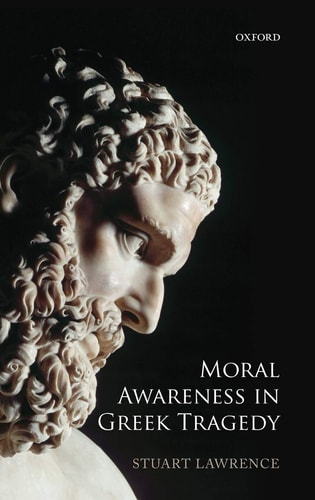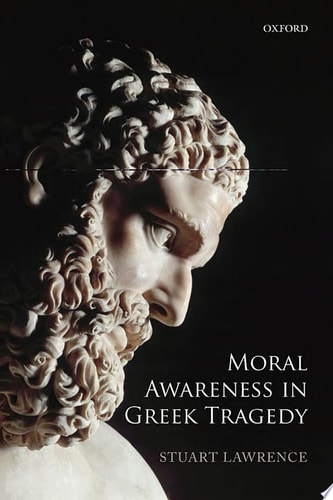
Moral Awareness in Greek Tragedy
0
0
As an Amazon Associate and affiliate partner, Menrva Books earns from qualifying purchases. Learn more
Author Description
Lawrence's volume provides a detailed discussion and analyses of the moral awareness of major characters in Greek tragedy, focusing particularly on the characters' recognition of moral issues and crises, their ability to reflect on them, and their consciousness of doing so.Beginning with a definition of morality and examining the implications of analysing the moral performance of fictional characters, Lawrence considers concepts of the self and the problem of autonomy and personal responsibility in the context of divine intervention, which is a crucial feature of the genre. The volume then moves on to the individual plays (Aeschylus' Seven Against Thebes and Oresteia; Sophocles' Ajax, Trachiniae, Oedipus Tyrannus, Electra, and Philoctetes; and Euripides' Medea, Hecuba, Hippolytus, Heracles, Electra, and Bacchae), focusing in each case on a crisis or crises faced by a major character and examining the background which led to it. Lawrence then considers the individual character's moral response and relates it to the critical issues formulated in the volume's opening discussions.The book will be important to any student of Classical Studies and those in Philosophy or Literature interested in a theoretical discussion of the morality of literary characters.
Menrva's Summary
THE THESIS
This volume investigates the nature of moral consciousness and ethical decision-making within the framework of ancient Greek tragedy. Stuart Lawrence, a scholar of classical literature, utilizes a philosophical lens to examine how tragic protagonists navigate crises, autonomy, and personal responsibility. By bridging the gap between literary analysis and moral philosophy, the author provides a structured framework for evaluating the internal deliberations of characters operating under the influence of divine intervention.
THE SCOPE MAP
What You Will Find
- A theoretical exploration of moral agency and the concept of the self in classical drama.
- Detailed analyses of specific plays by Aeschylus, Sophocles, and Euripides.
- A methodology for assessing character response to moral crises within the context of divine influence.
- A synthesis of philosophical inquiry applied to the study of fictional character development.
THE AUTHORITY PERSPECTIVE
Experts identify this work as a significant contribution to the intersection of classical studies and moral philosophy. Readers frequently note the academic density of the prose, which serves as a valuable resource for students and scholars examining the ethical dimensions of ancient Greek theater.
Page Count:
432
Publication Date:
2012-12-14
Publisher:
Oxford University Press
ISBN-10:
0199659761
ISBN-13:
9780199659760
Philosophy
Drama
Literary Criticism
Ancient Greek
Greek drama