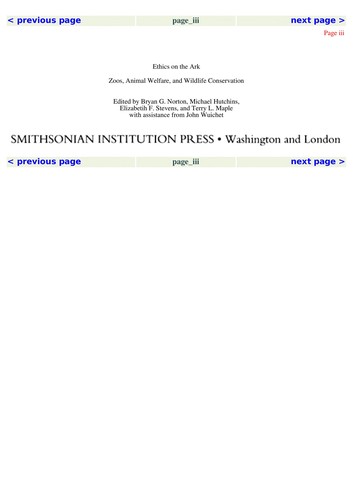
Ethics on the Ark
0
0
As an Amazon Associate and affiliate partner, Menrva Books earns from qualifying purchases. Learn more
Author Description
Ethics on the Ark presents a passionate, multivocal discussion - among zoo professionals, activists, conservation biologists, and philosophers - about the future of zoos and aquariums, the treatment of animals in captivity, and the question of whether the individual, the species, or the ecosystem is the most important focus in conservation efforts. Contributors represent all sides of the issues. Some advocate proposals to increase zoos' work in captive breeding programs. Others call for zoos to turn away from exotic, charismatic species and focus instead on community education programs aimed at protecting local fauna and habitats. Still others contend that zoos ought to be abolished. "Moving from the fundamental to the practical, from biodiversity to population regulation, from animal research to captive breeding, Ethics on the Ark represents an important gathering of the many fervent and contentious viewpoints shaping the wildlife conservation debate."--Jacket.
Menrva's Summary
THE THESIS
The future of zoos and aquariums, and the ethical considerations surrounding animal captivity and conservation priorities, are debated by a diverse group of experts. The book brings together zoo professionals, activists, conservation biologists, and philosophers to explore contentious viewpoints on the role of zoos. Contributors examine the merits of captive breeding programs, the potential shift towards focusing on local fauna and habitats over exotic species, and the radical proposition of abolishing zoos entirely. The discussion spans fundamental ethical questions to practical applications in biodiversity, research, and conservation strategy.
THE SCOPE MAP
- Multivocal discussion on the future of zoos and aquariums.
- Exploration of the treatment of animals in captivity.
- Debate on conservation priorities: individual animal vs. species vs. ecosystem.
- Arguments for and against captive breeding programs.
- Discussion on shifting focus from exotic species to local fauna and habitats.
- Consideration of the argument for abolishing zoos.
- Analysis of animal research and its ethical implications.
- Examination of population regulation in conservation contexts.
THE AUTHORITY PERSPECTIVE
This collection of essays presents a comprehensive overview of the fervent and contentious viewpoints shaping the wildlife conservation debate, particularly concerning zoos and aquariums. The book is structured to facilitate a multivocal discussion, bringing together a wide array of perspectives from professionals and ethicists alike. The scope of the work suggests it is intended for an audience engaged with environmental ethics, conservation biology, and the practicalities of zoological institutions. The diverse contributions indicate a text that challenges readers to consider multiple facets of animal welfare and conservation strategy.
Page Count:
330
Publication Date:
1995-01-01
ISBN-10:
1560985151
Non-Fiction
Animals
Nature
Art
Philosophy
Zoology
Conservation
Animal Ethics
Community Tags
Similar Books