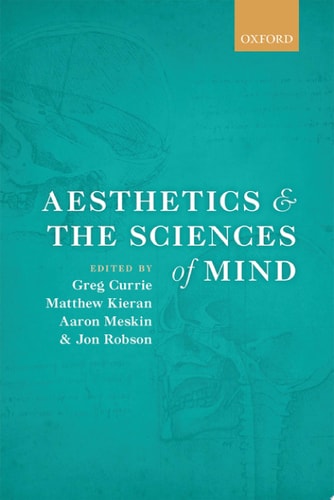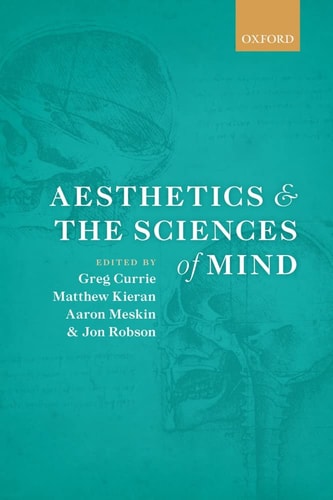
Aesthetics and the Sciences of Mind
0
0
As an Amazon Associate and affiliate partner, Menrva Books earns from qualifying purchases. Learn more
Author Description
Through much of the twentieth century, philosophical thinking about works of art, design, and other aesthetic products has emphasized intuitive and reflective methods, often tied to the idea that philosophy's business is primarily to analyze concepts. This "philosophy from the armchair" approach contrasts with methods used by psychologists, sociologists, evolutionary thinkers, and others who study the making and reception of the arts empirically. How far should philosophers be sensitive to the results of these studies? Is their own largely a priori method basically flawed? Are their views on aesthetic value, interpretation, imagination, and the emotions of art to be rethought in the light of best science? The essays in this volume seek answers to these questions, many through detailed studies of problems traditionally regarded as philosophical but where empirical inquiry seems to be shedding interesting light. No common view is looked for or found in this volume: a number of authors argue that the current enthusiasm for scientific approaches to aesthetics is based on a misunderstanding of the philosophical enterprise and sometimes on misinterpretation of the science; others suggest various ways that philosophy can and should accommodate and sometimes yield to the empirical approach. The editors provide a substantial introduction which sets the scene historically and conceptually before summarizing the claims and arguments of the essays.
Menrva's Summary
THE THESIS
This volume investigates the extent to which philosophical aesthetics should integrate empirical findings from the cognitive and social sciences. The editors, Aaron Meskin, Greg Currie, Jon Robson, and Matthew Kieran, curate a collection of essays that challenge the traditional "armchair" methodology of philosophy. By examining the intersection of aesthetic theory and scientific inquiry, the authors evaluate whether concepts such as imagination, interpretation, and emotional response to art require revision in light of contemporary empirical data.
THE SCOPE MAP
What You Will Find
- Critical analysis of the tension between a priori philosophical methods and empirical scientific research.
- Explorations of how psychology and evolutionary theory inform the study of aesthetic value.
- Case studies applying scientific data to traditional philosophical problems in art and design.
- A comprehensive introduction that maps the historical and conceptual landscape of the field.
THE AUTHORITY PERSPECTIVE
Experts recognize this collection as a significant contribution to the burgeoning field of empirically informed aesthetics. Readers frequently note the academic density of the prose, which serves as a rigorous resource for scholars and advanced students navigating the intersection of philosophy and the sciences of mind.
Page Count:
256
Publication Date:
2018-03-04
Publisher:
Oxford University Press
ISBN-10:
0199669643
ISBN-13:
9780199669646
Psychology
Philosophy
Art
Art Theory
Aesthetics