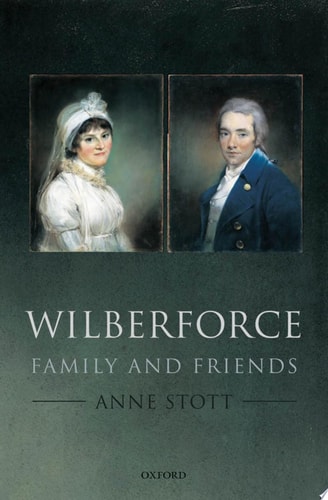
Wilberforce: Family and Friends
0
0
As an Amazon Associate and affiliate partner, Menrva Books earns from qualifying purchases. Learn more
Author Description
At the age of thirty-seven, after a very short courtship, William Wilberforce married Barbara Spooner, the daughter of a Midlands industrialist, and their first child was born in the following year. His family life brought him both happiness and anxiety. Convinced that he had been 'too long a Bachelor', he lacked confidence in his ability to be a good husband and father.A great deal has been written about Wilberforce's role in the abolition of the slave trade, but far less about his private life. Yet this is the man who exchanged his prestigious Yorkshire constituency for an undemanding pocket borough in order to devote himself to his family. In her innovative study, Anne Stott casts fresh light on the abolitionist and his friends, the group of Evangelical philanthropists retrospectively named the Clapham sect. While the men occupied important public roles they were also deeply committed to the ideal of domesticity.The ideology of the period depicted the middle-class home as a place of tranquil retreat from the cares and temptations of public life, though the family crises depicted in this study show that the reality was always more complex. With varying degrees of success, the Clapham men and women brought their Evangelical piety to their patterns of courtship and marriage, their philosophy of child-rearing, and their strategies in coping with death and bereavement.For the first time, much of this story is told from the perspective of the wives, and it is primarily through their voices that the book's themes of the family, women and gender, childhood and education, sexuality, and intimacy are explored.
Menrva's Summary
THE THESIS
This work investigates how the private domestic lives and family dynamics of William Wilberforce and the Clapham Sect influenced their public moral crusades and personal identities. Anne Stott, a historian specializing in the Evangelical movement, utilizes primary source correspondence and personal journals to challenge the traditional focus on Wilberforce's political achievements. By centering the experiences of the wives and children within this influential group, the author argues that the ideal of domesticity was a central, albeit complex, pillar of their Evangelical faith and social philosophy.
THE SCOPE MAP
What You Will Find
- Analysis of 19th-century Evangelical courtship, marriage, and child-rearing practices.
- Examination of the Clapham Sect's private correspondence and domestic strategies.
- Gender-focused historical inquiry into the roles of women within the Evangelical movement.
- Exploration of how personal bereavement and family crises shaped the public figures of the era.
THE AUTHORITY PERSPECTIVE
Historians and scholars of the period frequently note the book's success in humanizing a major political figure through the lens of gender and domestic history. Experts highlight this as a significant contribution to the study of the Clapham Sect, providing a necessary counterpoint to traditional political biographies.
Page Count:
384
Publication Date:
2012-04-07
Publisher:
Oxford University Press
ISBN-10:
0199699399
ISBN-13:
9780199699391
Biography
History
Religion
19th Century
Social History
Gender Studies
Clapham Sect
Great Britain
Community Tags
Similar Books