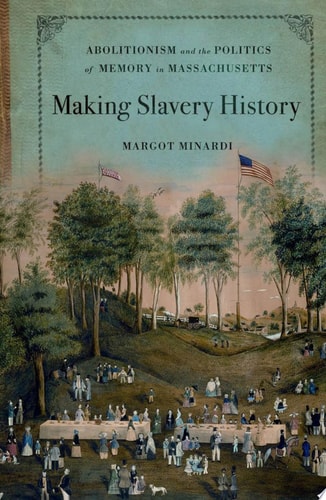
Making Slavery History
0
0
As an Amazon Associate and affiliate partner, Menrva Books earns from qualifying purchases. Learn more
Author Description
Making Slavery History Focuses On How Commemorative Practices And Historical Arguments About The American Revolution Set The Course For Antislavery Politics In The Nineteenth Century. The Particular Setting Is A Time And Place In Which People Were Hyperconscious Of Their Roles As Historical Actors And Narrators: Massachusetts In The Period Between The Revolution And The Civil War. This Book Shows How Local Abolitionists, Both Black And White, Drew On Their State's Revolutionary Heritage To Mobilize Public Opposition To Southern Slavery. When It Came To Securing The Citizenship Of Free People Of Color Within The Commonwealth, Though, Black And White Abolitionists Diverged In Terms Of How They Idealized Black Historical Agency. Although It Is Often Claimed That Slavery In New England Is A History Long Concealed, Making Slavery History Finds It Hidden In Plain Sight. From Memories Of Phillis Wheatley And Crispus Attucks To Representations Of Black Men At The Battle Of Bunker Hill, Evidence Of The Local History Of Slavery Cropped Up Repeatedly In Early National Massachusetts. In Fixing Attention On These Seemingly Marginal Presences, This Book Demonstrates That Slavery Was Unavoidably Entangled In The Commemorative Culture Of The Early Republic-even In A Place That Touted Itself As The Cradle Of Liberty. Transcending The Particular Contexts Of Massachusetts And The Early American Republic, This Book Is Centrally Concerned With The Relationship Between Two Ways Of Making History, Through Social And Political Transformation On The One Hand And Through Commemoration, Narration, And Representation On The Other. Making Slavery History Examines The Relationships Between Memory And Social Change, Between Histories Of Slavery And Dreams Of Freedom, And Between The Stories We Tell Ourselves About Who We Have Been And The Possibilities We Perceive For Who We Might Become.
Menrva's Summary
THE THESIS
This book investigates how commemorative practices and historical narratives regarding the American Revolution shaped the trajectory of nineteenth-century antislavery politics in Massachusetts. Margot Minardi, a historian of the early American republic, utilizes primary source documentation and cultural analysis to argue that local abolitionists leveraged the state's revolutionary heritage to mobilize public opposition to slavery. The work examines the tension between political activism and the symbolic representation of Black historical agency during the period between the Revolution and the Civil War.
THE SCOPE MAP
What You Will Find
- Analysis of commemorative practices in Massachusetts between the American Revolution and the Civil War.
- Examination of how Black and white abolitionists utilized revolutionary rhetoric to challenge slavery.
- Case studies of historical figures such as Phillis Wheatley and Crispus Attucks within the context of public memory.
- Exploration of the divergence between Black and white activists regarding the idealization of Black citizenship and historical agency.
THE AUTHORITY PERSPECTIVE
Scholars and historians recognize this work as a significant contribution to the study of memory and political mobilization in the early American republic. Readers frequently note the meticulous archival research and the author's ability to connect local Massachusetts history to broader national themes of freedom and citizenship.
Page Count:
240
Publication Date:
2012-01-01
Publisher:
Oxford University Press
ISBN-10:
0199702209
ISBN-13:
9780199702206
History
Cultural History
Abolitionism
American History
Political History
Slavery
Community Tags
Similar Books