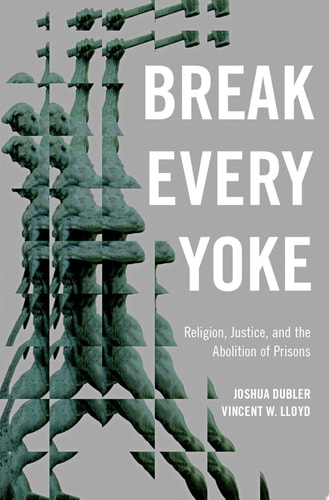
Break Every Yoke: Religion, Justice, and the Abolition of Prisons
0
0
As an Amazon Associate and affiliate partner, Menrva Books earns from qualifying purchases. Learn more
Author Description
Changes in the American religious landscape enabled the rise of mass incarceration. Religious ideas and practices also offer a key for ending mass incarceration. These are the bold claims advanced by Break Every Yoke, the joint work of two activist-scholars of American religion. Once, in an era not too long past, Americans, both incarcerated and free, spoke a language of social liberation animated by religion. In the era of mass incarceration, we have largely forgotten how to dream-and organize-this way. To end mass incarceration we must reclaim this lost tradition. Properly conceived, the movement we need must demand not prison reform but prison abolition. Break Every Yoke weaves religion into the stories about race, politics, and economics that conventionally account for America's grotesque prison expansion of the last half century, and in so doing it sheds new light on one of our era's biggest human catastrophes. By foregrounding the role of religion in the way political elites, religious institutions, and incarcerated activists talk about incarceration, Break Every Yoke is an effort to stretch the American moral imagination and contribute resources toward envisioning alternative ways of doing justice. By looking back to nineteenth century abolitionism, and by turning to today's grassroots activists, it argues for reclaiming the abolition spirit.
Menrva's Summary
THE THESIS
This book investigates how religious ideas and practices have both facilitated the rise of mass incarceration and provide a necessary framework for its abolition. Joshua Dubler and Vincent W. Lloyd, both scholars of American religion, argue that the contemporary discourse on prison reform is insufficient. They contend that by reclaiming a historical tradition of social liberation rooted in religious thought, activists can move beyond reformist policies toward a radical vision of prison abolition.
THE SCOPE MAP
What You Will Find
- A historical analysis of nineteenth-century abolitionism as a moral and political model.
- A critique of current religious institutions and their role in the prison-industrial complex.
- Case studies of grassroots activists and incarcerated individuals organizing for systemic change.
Scope Limits
- The text does not provide a step-by-step policy manual for legislative reform.
- The analysis focuses primarily on the American religious and political landscape rather than global carceral systems.
THE AUTHORITY PERSPECTIVE
Scholars and activists often cite this work as a significant contribution to the intersection of political theology and carceral studies. Readers frequently note the academic density of the prose, which challenges conventional secular approaches to criminal justice reform.
Page Count:
0
Publication Date:
1900-01-01
Publisher:
Oxford University Press,
ISBN-10:
019094918X
ISBN-13:
9780190949181
Religion
Social justice
Criminology
Abolitionism
American History
Prisons
Sociology
Criminologie
Community Tags
Other Editions(2)
Similar Books