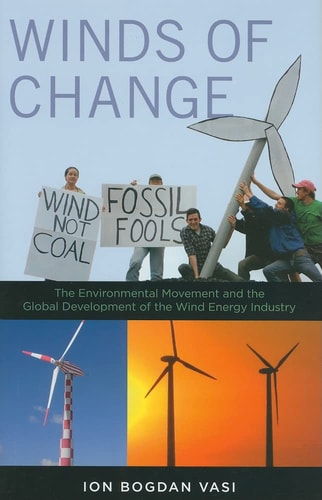
Winds of Change: The Environmental Movement and the Global Development of the Wind Energy Industry
0
0
As an Amazon Associate and affiliate partner, Menrva Books earns from qualifying purchases. Learn more
Author Description
In recent decades the global wind energy industry has undergone explosive growth, and there is still vast potential for wind to supply more of the world's energy. Though not only is wind power far from reaching its potential, its rise has been uneven and irregular. What factors influence the development of the wind energy industry, and why has it developed successfully in some places but not in others?In Winds of Change, Ion Bogdan Vasi argues that the development of wind energy is dependent not only on improvements in technology and economic forces, but also in large part on the efforts of the environmental movement. Vasi defines and analyses three pathways through which the environmental movement has contributed to industry growth: it has influenced the adoption and implementation of renewable energy policies, created consumer demand for clean energy, and changed the institutional logics of the energy sector. Vasi uses quantitative analysis to present the big picture of global wind power development, and qualitative research to understand why certain countries are world leaders in wind energy while others are relatively underdeveloped. Through interviews with renewable energy professionals and campaigners, he shows that environmental groups and activists participated actively in energy policymaking, pressured various organizations to purchase wind power, and formed new companies that specialized in wind-farm development. He also demonstrates that environmentalists contributed to wind turbine manufacturing by becoming entrepreneurs, innovators, and advocates.Winds of Change sheds much new light on how wind energy is adopted and why, and demonstrates how activists and social movements can contribute to the creation of new industries.
Menrva's Summary
THE THESIS
This book investigates the specific social and political factors that determine why the wind energy industry experiences uneven growth across different global regions. Ion Bogdan Vasi, a scholar in sociology and environmental studies, utilizes a mixed-methods approach to examine the intersection of social movements and industrial development. By synthesizing quantitative data on global wind power with qualitative insights from industry professionals, Vasi argues that the environmental movement acts as a primary catalyst for renewable energy adoption through policy influence, market demand, and institutional change.
THE SCOPE MAP
What You Will Find
- Quantitative analysis of global wind energy development trends across multiple nations.
- A framework identifying three distinct pathways through which environmental activism impacts industrial growth.
- Qualitative evidence derived from interviews with renewable energy professionals, campaigners, and entrepreneurs.
- Case studies comparing countries that have successfully integrated wind power against those where development remains stagnant.
THE AUTHORITY PERSPECTIVE
Experts in environmental sociology and energy policy recognize this work as a rigorous examination of how social movements shape industrial landscapes. Readers frequently note the academic density of the prose, which provides a comprehensive look at the institutional mechanisms behind renewable energy adoption.
Page Count:
264
Publication Date:
2011-01-12
Publisher:
Oxford University Press
ISBN-10:
0199746923
ISBN-13:
9780199746927
Economics
Sustainability
Sociology
Technology
Energy policy
Wind Power
Community Tags
Other Editions(3)

Similar Books















Reader Comments
Share Your Thoughts
No comments yet. Be the first to share your thoughts!