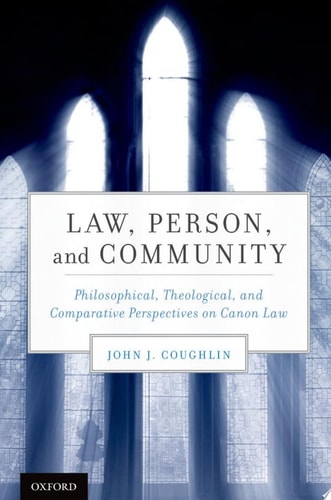
Law, Person, and Community: Philosophical, Theological, and Comparative Perspectives on Canon Law
0
0
As an Amazon Associate and affiliate partner, Menrva Books earns from qualifying purchases. Learn more
Author Description
Law, Person, and Community: Philosophical, Theological, and Comparative Perspectives on Canon Law takes up the fundamental question "What is law?" through a consideration of the interrelation of the concepts of law, person, and community. As with the concept of law described by secular legal theorists, canon law aims to set a societal order that harmonizes the interests of individuals and communities, secures peace, guarantees freedom, and establishes justice. At the same time, canon law rests upon a traditional understanding of the spiritual end of the human person and religious nature of community.The comparison of one of the world's ancient systems of religious law with contemporary conceptions of law rooted in secular theory raises questions about the law's power to bind individuals and communities. Professor John J. Coughlin employs comparative methodology in an attempt to reveal the differing concepts of the human person reflected in both canon law and secular legal theory. Contrasting the contemporary positivistic view of law with the classical view reflected in canon law, Law, Person, and Community discusses the relationship between canon law, theology, and natural law. It also probes the interplay between the metaphysical and historical in the theory of law by an examination of canonical equity, papal authority, and the canon law of marriage. It juxtaposes the assumptions of canon law about church-state relations with those of the modern liberal state as exemplified by U.S. first amendment jurisprudence. No scholarly work has yet addressed this question of how the principles and substance of canon law, both past and present, relate to current issues in legal theory, such as the foundation of human rights and in particular the right of religious freedom for individuals and communities.
Menrva's Summary
THE THESIS
What is the fundamental nature of law when examined through the intersection of canon law, philosophical inquiry, and secular legal theory? John J. Coughlin, a scholar and member of the Order of Friars Minor, investigates how the traditional spiritual objectives of canon law compare to modern secular legal frameworks. By analyzing the concepts of the human person and community, the author argues that canon law provides a distinct, historically grounded perspective on justice, freedom, and the metaphysical foundations of legal authority.
THE SCOPE MAP
What You Will Find
- Comparative analysis between classical canonical legal theory and contemporary secular positivism.
- Examination of canonical equity, papal authority, and the specific legal structures governing marriage.
- Juxtaposition of church-state relations with modern U.S. First Amendment jurisprudence.
- Exploration of the relationship between natural law, theology, and the foundation of individual human rights.
THE AUTHORITY PERSPECTIVE
Experts identify this work as a significant contribution to the intersection of jurisprudence and religious studies, noting its rigorous comparative methodology. Readers frequently highlight the text's academic density and its utility for those seeking to understand the philosophical underpinnings of canon law in a modern context.
Page Count:
320
Publication Date:
2012-03-16
Publisher:
Oxford University Press
ISBN-10:
0199756775
ISBN-13:
9780199756773
Philosophy
Religion
Law
Canon law
United States
Theology
Legal Theory
Community Tags
Similar Books