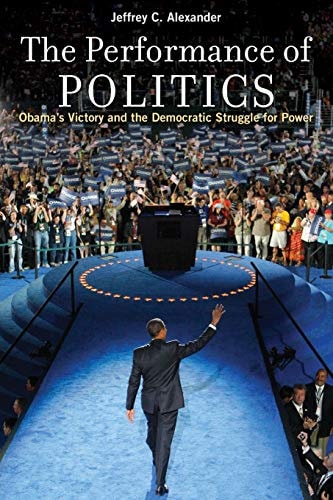
The Performance of Politics: Obama's Victory and the Democratic Struggle for Power
0
0
As an Amazon Associate and affiliate partner, Menrva Books earns from qualifying purchases. Learn more
Author Description
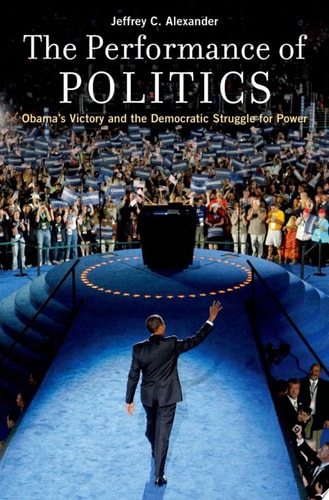
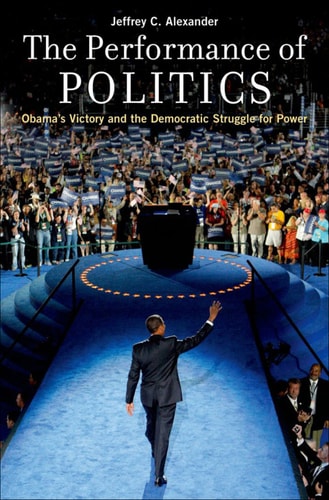
Contemporary observers of politics in America often reduce democracy to demography. Whatever portion of the vote not explained by the class, gender, race, and religious differences of voters is attributed to the candidates' positions on the issues of the day. But are these the only--or even the main--factors that determine the vote? The Performance of Politics develops a new way of looking at democratic struggles for power, explaining what happened, and why, during the 2008 presidential campaign in the United States. Drawing on vivid examples taken from a range of media coverage, participant observation at a Camp Obama, and interviews with leading political journalists, Jeffrey Alexander argues that images, emotion, and performance are the central features of the battle for power. While these features have been largely overlooked by pundits, they are, in fact, the primary foci of politicians and their staff. Obama and McCain painstakingly constructed heroic self-images for their campaigns and the successful projections of those images suffused not only each candidate's actual rallies, and not only their media messages, but also the ground game. Money and organization facilitate the ground game, but they do not determine it. Emotion, images, and performance do. Though an untested senator and the underdog in his own party, Obama succeeded in casting himself as the hero--and McCain the anti-hero--and the only candidate fit to lead in challenging times. Illuminating the drama of Obama's celebrity, the effect of Sarah Palin on the race, and the impact of the emerging financial crisis, Alexander's engaging narrative marries the immediacy and excitement of the final months of this historic presidential campaign with a new understanding of how politics work.
Menrva's Summary
THE THESIS
This book investigates whether democratic power struggles are determined solely by demographic factors and policy positions, or if performative elements play a more central role. Jeffrey C. Alexander, a prominent sociologist, utilizes the 2008 United States presidential election as a primary case study to challenge traditional political analysis. He argues that political success is heavily contingent upon the construction of heroic self-images, emotional resonance, and the strategic performance of candidates rather than just organizational or financial resources.
THE SCOPE MAP
What You Will Find
- Analysis of the 2008 presidential campaign between Barack Obama and John McCain.
- A theoretical framework focusing on the role of performance, emotion, and imagery in political contests.
- Qualitative data derived from participant observation at Camp Obama and interviews with political journalists.
- Examination of specific political events including the financial crisis and the impact of Sarah Palin's candidacy.
THE AUTHORITY PERSPECTIVE
Experts in political sociology recognize this work as a significant contribution to the study of political communication and performance theory. Readers frequently note the academic rigor of the text, which provides a sophisticated lens for understanding how candidates manufacture public personas to secure electoral victory.
Page Count:
380
Publication Date:
2010-01-01
Publisher:
Oxford University Press
ISBN-10:
0199780021
ISBN-13:
9780199780020
American Government
Media Studies
American Politics
Sociology