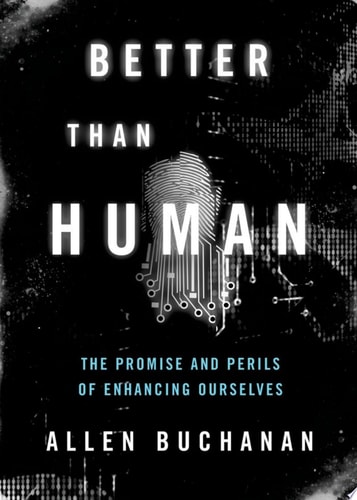
Better Than Human
0
0
As an Amazon Associate and affiliate partner, Menrva Books earns from qualifying purchases. Learn more
Author Description
Is It Right To Use Biomedical Technologies To Make Us Better Than Well Or Even Perhaps Better Than Human? Should We View Our Biology As Fixed Or Should We Try To Improve On It? College Students Are Already Taking Cognitive Enhancement Drugs. The U.s. Army Is Already Working To Develop Drugs And Technologies To Produce Super Soldiers. Scientists Already Know How To Use Genetic Engineering Techniques To Enhance The Strength And Memories Of Mice And The Application Of Such Technologies To Humans Is On The Horizon. In Better Than Human, Philosopher-bioethicist Allen Buchanan Grapples With The Ethical Dilemmas Of The Biomedical Enhancement Revolution. Biomedical Enhancements Can Make Us Smarter, Have Better Memories, Be Stronger, Quicker, Have More Stamina, Live Much Longer, Avoid The Frailties Of Aging, And Enjoy Richer Emotional Lives. In Spite Of The Benefits That Biomedical Enhancements May Bring, Many People Instinctively Reject Them. Some Worry That We Will Lose Something Important-our Appreciation For What We Have Or What Makes Human Beings Distinctively Valuable. Others Assume That Biomedical Enhancements Will Only Be Available To The Rich, With The Result That Social Inequalities Will Worsen. Buchanan Shows That The Debate Over Enhancement Has Been Distorted By False Assumptions And Misleading Rhetoric. To Think Clearly About Enhancement, We Have To Acknowledge That Human Nature Is A Mixed Bag And That Our Species Has Many Design Flaws. We Should Be Open Be Open To The Possibility Of Becoming Better Than Human, While Never Underestimating The Risks That Our Attempts To Improve May Back-fire.
Menrva's Summary
THE THESIS
This book investigates the ethical legitimacy and societal implications of utilizing biomedical technologies to enhance human biological and cognitive capabilities. Allen Buchanan, a prominent philosopher and bioethicist, utilizes a framework of moral philosophy to challenge common intuitions regarding human nature and technological intervention. He examines current trends in cognitive enhancement, genetic engineering, and military research to argue that the reflexive rejection of enhancement is often based on flawed reasoning. The text systematically dismantles common objections while proposing a balanced approach to the potential risks and benefits of human improvement.
THE SCOPE MAP
What You Will Find
- Analysis of cognitive enhancement drugs and genetic engineering applications
- Ethical evaluation of social inequality and access to biomedical technologies
- Critique of the 'naturalistic fallacy' regarding human biology and design flaws
- Risk assessment framework for the future of human enhancement
THE AUTHORITY PERSPECTIVE
Experts in bioethics frequently cite this work as a rigorous, balanced contribution to the debate on human enhancement. Readers often note that the prose is accessible yet intellectually demanding, providing a necessary philosophical structure for navigating complex technological advancements.
Page Count:
256
Publication Date:
2011-01-01
Publisher:
Oxford University Press
ISBN-10:
0199797994
ISBN-13:
9780199797998
Science
Philosophy
Bioethics
Sociology
Technology
Community Tags
Similar Books