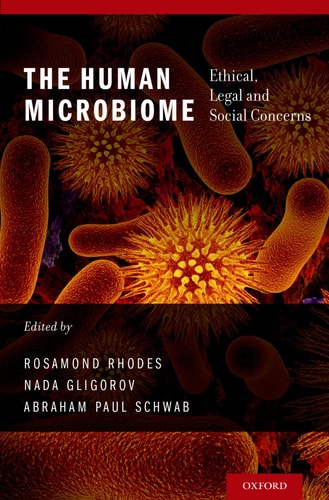
The Human Microbiome: Ethical, Legal and Social Concerns
0
0
As an Amazon Associate and affiliate partner, Menrva Books earns from qualifying purchases. Learn more
Author Description
The human microbiome is the bacteria, viruses, and fungi that cover our skin, line our intestines, and flourish in our body cavities. Work on the human microbiome is new, but it is quickly becoming a leading area of biomedical research. What scientists are learning about humans and our microbiomes could change medical practice by introducing new treatment modalities. This new knowledge redefines us as superorganisms comprised of the human body and the collection of microbes that inhabit it and reveals how much we are a part of our environment. The understanding that microbes are not only beneficial but sometimes necessary for survival recasts our interaction with microbes from adversarial to neighborly.This volume explores some of the science that makes human microbiome research possible. It then considers ethical, legal, and social concerns raised by microbiome research. Chapters explore issues related to personal identity, property rights, and privacy. The authors reflect on how human microbiome research challenges reigning views on public health and research ethics. They also address the need for thoughtful policies and procedures to guide the use of the biobanked human samples required for advancing this new domain of research. In the course of these explorations, they introduce examples from the history of biomedical science and recent legal cases that shed light on the issues and inform the policy recommendations they offer at the end of each topic's discussion.This volume is the product of an NIH Human Microbiome Project grant. It represents three years of conversations focused on consensus formation by the twenty-seven members of the interdisciplinary Microbiome Working Group.
Menrva's Summary
THE THESIS
This volume investigates the complex ethical, legal, and social implications arising from the rapid advancement of human microbiome research. The authors, including Abraham Paul Schwab and Nada Gligorov, leverage their interdisciplinary expertise to examine how the shift in understanding humans as 'superorganisms' necessitates a reevaluation of traditional biomedical frameworks. By synthesizing findings from an NIH-funded working group, the text provides a structured analysis of how microbial science challenges existing paradigms of identity, privacy, and public health policy.
THE SCOPE MAP
What You Will Find
- Analysis of the shift from adversarial to symbiotic views of human-microbe interactions.
- Ethical frameworks regarding personal identity, property rights, and biological privacy.
- Case studies and historical precedents from biomedical science and legal proceedings.
- Policy recommendations for the management and ethical use of biobanked human samples.
THE AUTHORITY PERSPECTIVE
Experts identify this work as a foundational text for those navigating the emerging intersection of microbiology and bioethics. Readers frequently note the academic density of the prose, which serves as a comprehensive resource for policymakers and researchers alike.
Page Count:
288
Publication Date:
2013-08-15
Publisher:
Oxford University Press
ISBN-10:
0199829411
ISBN-13:
9780199829415
Science
Medical Law
Sociology
Public Health
Medicine
Bioethics
Genomics
Human Body
Community Tags
Similar Books