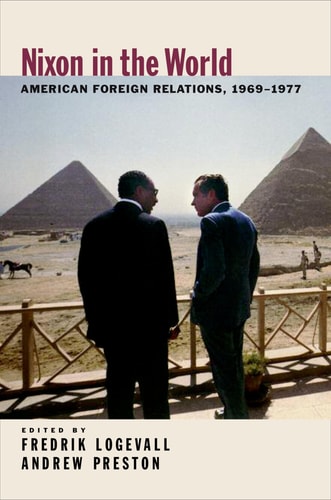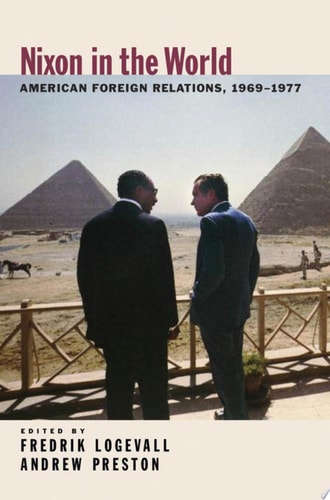
Nixon in the World: American Foreign Relations, 1969-1977
0
0
As an Amazon Associate and affiliate partner, Menrva Books earns from qualifying purchases. Learn more
Author Description
In the 1970s, the United States faced challenges on a number of fronts. By nearly every measure, American power was no longer unrivalled. The task of managing America's relative decline fell to President Richard Nixon, Henry Kissinger, and Gerald Ford. From 1969 to 1977, Nixon, Kissinger, and Ford reoriented U.S. foreign policy from its traditional poles of liberal interventionism and conservative isolationism into a policy of active but conservative engagement. In Nixon in the World, seventeen leading historians of the Cold War and U.S. foreign policy show how they did it, where they succeeded, and where they took their new strategy too far. Drawing on newly declassified materials, they provide authoritative and compelling analyses of issues such as Vietnam, détente, arms control, and the U.S.-China rapprochement, creating the first comprehensive volume on American foreign policy in this pivotal era.
Menrva's Summary
THE THESIS
This volume investigates how the Nixon and Ford administrations navigated the relative decline of American global power through a shift toward active, conservative engagement. Edited by Andrew Preston and Fredrik Logevall, the book compiles research from seventeen prominent historians who utilize newly declassified archival materials to evaluate the strategic successes and failures of U.S. foreign policy between 1969 and 1977. The authors analyze the transition away from traditional liberal interventionism and conservative isolationism, providing a rigorous assessment of the era's diplomatic maneuvers.
THE SCOPE MAP
What You Will Find
- Comprehensive analysis of U.S. foreign policy during the Nixon and Ford presidencies.
- Detailed examinations of the Vietnam War, détente, and arms control negotiations.
- Scholarly investigation into the U.S.-China rapprochement.
- Evidence-based assessments derived from newly declassified government documents.
THE AUTHORITY PERSPECTIVE
Experts identify this collection as a foundational text for understanding the complexities of American diplomacy during the 1970s. Readers frequently note the academic density of the prose and the high level of historical detail provided by the contributing scholars.
Page Count:
364
Publication Date:
2008-01-01
Publisher:
Oxford University Press
ISBN-10:
019988627X
ISBN-13:
9780199886272
History
Biography
International relations
American History
Cold War