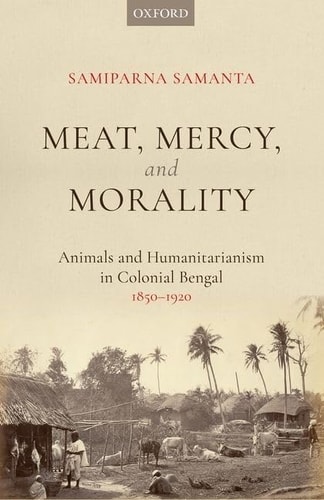
Meat, Mercy, Morality: Animals and Humanitarianism in Colonial Bengal, 1850-1920
0
0
As an Amazon Associate and affiliate partner, Menrva Books earns from qualifying purchases. Learn more
Author Description
This book disentangles complex discourses around humanitarianism to understand the nature of British colonialism in India. It contends that the colonial project of animal protection in late nineteenth-century Bengal mirrored an irony. Emerging notions of public health and debates on cruelty against animals exposed the disjunction between the claims of a benevolent Empire and a powerful imperial reality where the state constantly sought to discipline its subjects-both human and nonhuman. Centered around stories of animals as diseased, eaten, and overworked, thebook shows how such contests over appropriate measures for controlling animals became part of wider discussions surrounding environmental ethics, diet, sanitation, and the politics of race and class. The authorcombines history with archive, arguing that colonial humanitarianism was not only an idiom of rule, but was also translated into Bengali dietetics, anxieties, vegetarianism, and vigilantism, the effect of which can be seen incontemporary politics of animal slaughter in India.
Menrva's Summary
THE THESIS
This book investigates the intersection of colonial humanitarianism, animal protection, and imperial power dynamics in late nineteenth and early twentieth-century Bengal. Dr. Samiparna Samanta utilizes archival research to argue that colonial efforts to regulate animal welfare were deeply intertwined with the state's desire to discipline both human and nonhuman subjects. By examining the treatment of animals as objects of disease, labor, and consumption, the author demonstrates how these policies reflected broader anxieties regarding race, class, and environmental ethics within the British Empire.
THE SCOPE MAP
What You Will Find
- Analysis of colonial public health policies and animal cruelty legislation in Bengal between 1850 and 1920.
- Examination of how animal protection discourse influenced Bengali dietetics, vegetarianism, and social vigilantism.
- Exploration of the connection between colonial-era animal politics and contemporary debates on animal slaughter in India.
Scope Limits
- The study is geographically focused on Bengal and does not provide a comprehensive history of animal welfare across all of British India.
- The analysis prioritizes the period between 1850 and 1920, excluding post-independence developments except as brief contextual references.
THE AUTHORITY PERSPECTIVE
Scholars in the field of South Asian history and animal studies recognize this work as a significant contribution to understanding the intersection of colonial governance and environmental ethics. Readers frequently note the academic density of the prose and the author's meticulous use of archival sources to bridge the gap between historical colonial policy and modern political discourse.
Page Count:
288
Publication Date:
2021-11-09
Publisher:
Oxford University Press
ISBN-10:
0190129131
ISBN-13:
9780190129132
History
Sociology
Environmental History
Asian History
Animal Studies
Community Tags
Similar Books