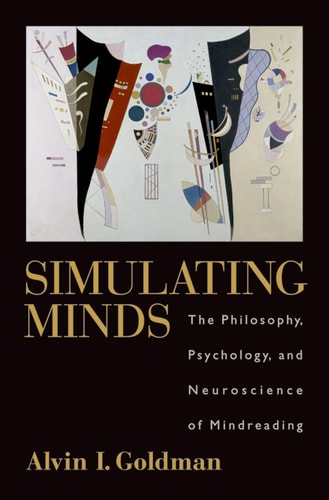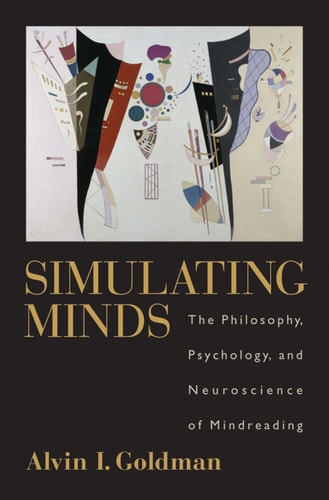
Simulating Minds: The Philosophy, Psychology, and Neuroscience of Mindreading
0
0
As an Amazon Associate and affiliate partner, Menrva Books earns from qualifying purchases. Learn more
Author Description
People are minded creatures; we have thoughts, feelings and emotions. More intriguingly, we grasp our own mental states, and conduct the business of ascribing them to ourselves and others without instruction in formal psychology. How do we do this? And what are the dimensions of our grasp of the mental realm? In this book, Alvin I. Goldman explores these questions with the tools of philosophy, developmental psychology, social psychology and cognitive neuroscience. He refines an approach called simulation theory, which starts from the familiar idea that we understand others by putting ourselves in their mental shoes. Can this intuitive idea be rendered precise in a philosophically respectable manner, without allowing simulation to collapse into theorizing? Given a suitable definition, do empirical results support the notion that minds literally create (or attempt to create) surrogates of other peoples mental states in the process of mindreading? Goldman amasses a surprising array of evidence from psychology and neuroscience that supports this hypothesis.
Menrva's Summary
THE THESIS
This book investigates the cognitive mechanisms behind mindreading, specifically questioning how humans attribute mental states to themselves and others without formal psychological training. Alvin I. Goldman, a prominent philosopher of mind, synthesizes research from developmental psychology, social psychology, and cognitive neuroscience to evaluate the validity of simulation theory. He argues that humans understand others by generating surrogates of their mental states, providing a rigorous framework that distinguishes this process from purely theoretical reasoning.
THE SCOPE MAP
What You Will Find
- An analysis of simulation theory as a primary mechanism for social cognition.
- Integration of empirical data from cognitive neuroscience and developmental psychology.
- A philosophical defense of mindreading as a surrogate-based mental process.
- Examination of the boundaries between simulation and folk-psychological theorizing.
THE AUTHORITY PERSPECTIVE
Experts recognize this work as a foundational text for understanding the intersection of philosophy and cognitive science regarding social cognition. Readers frequently note the academic density of the prose, which requires a strong background in philosophical terminology to fully grasp the nuances of the argument.
Page Count:
376
Publication Date:
2006-01-01
Publisher:
Oxford University Press
ISBN-10:
0199881421
ISBN-13:
9780199881420
Psychology
Philosophy
Mind & Body
Neuroscience