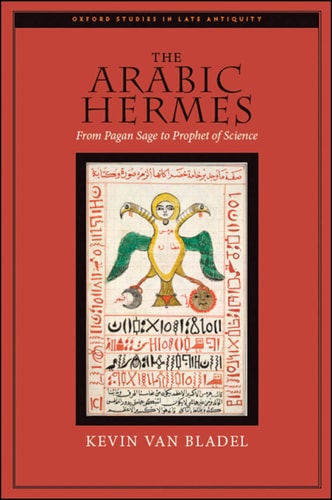
The Arabic Hermes: From Pagan Sage to Prophet of Science
0
0
As an Amazon Associate and affiliate partner, Menrva Books earns from qualifying purchases. Learn more
Author Description
This is the first major study devoted to the early Arabic reception and adaption of the figure of Hermes Trismegistus, the legendary Egyptian sage to whom were ascribed numerous works on astrology, alchemy, talismans, medicine, and philosophy. Before the more famous Renaissance European reception of the ancient Greek Hermetica, the Arabic tradition about Hermes and the works under his name had been developing and flourishing for seven hundred years. The legendary Egyptian Hermes Trismegistus was renowned in Roman antiquity as an ancient sage whose teachings were represented in books of philosophy and occult science. The works in his name, written in Greek by Egyptians living under Roman rule, subsequently circulated in many languages and regions of the Roman and Sasanian Persian empires. After the rise of Arabic as a prestigious language of scholarship in the eighth century, accounts of Hermes identity and Hermetic texts were translated into Arabic along with the hundreds of other works translated from Greek, Middle Persian, and other literary languages of antiquity. Hermetica were in fact among the earliest translations into Arabic, appearing already in the eighth century. This book explains the origins of the Arabic myth of Hermes Trismegistus, its sources, the reasons for its peculiar character, and its varied significance for the traditions of Hermetica in Asia and northern Africa as well as Europe. It shows who pre-modern Arabic scholars thought Hermes was and how they came to that view.
Menrva's Summary
THE THESIS
This book investigates the historical origins and evolution of the Arabic myth of Hermes Trismegistus, examining how a pagan sage was transformed into a prophet of science within Islamic intellectual history. Kevin van Bladel, a scholar of Near Eastern languages and civilizations, utilizes a rigorous analysis of early Arabic translations and historical accounts to trace the development of Hermeticism. He argues that the Arabic reception of these texts was not merely a passive transmission but a creative adaptation that integrated ancient wisdom into the burgeoning scientific discourse of the eighth century and beyond. The study provides a comprehensive framework for understanding how pre-modern scholars synthesized Greek, Persian, and Egyptian traditions to construct a unique identity for Hermes.
THE SCOPE MAP
What You Will Find
- An analysis of the early Arabic reception of Hermetic texts from the eighth century onwards.
- A detailed examination of the transition of Hermeticism from Roman and Sasanian Persian contexts into the Islamic world.
- Primary source evidence derived from early Arabic translations of philosophy, alchemy, and astrology.
- An exploration of the cultural and intellectual factors that shaped the Arabic identity of Hermes Trismegistus.
THE AUTHORITY PERSPECTIVE
Scholars and historians of late antiquity and Islamic intellectual history recognize this work as a foundational study that fills a significant gap in the understanding of Hermetic transmission. Readers frequently note the academic density of the prose and the meticulous attention to linguistic and historical detail provided by the author.
Page Count:
291
Publication Date:
2009-01-01
Publisher:
Oxford University Press
ISBN-10:
0199888507
ISBN-13:
9780199888504
History
Science
Philosophy
Religion
Ancient History
Gnosticism
Theosophy
History & Surveys
Community Tags
Similar Books