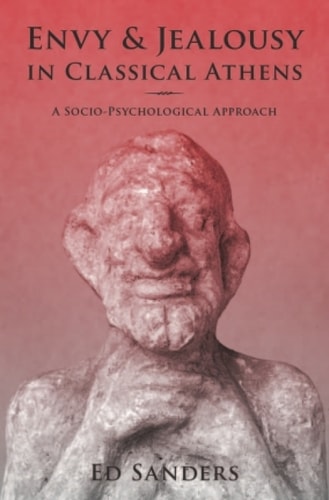
Envy and Jealousy in Classical Athens: A Socio-Psychological Approach
0
0
As an Amazon Associate and affiliate partner, Menrva Books earns from qualifying purchases. Learn more
Author Description
Emotions vary extensively between cultures, especially in their eliciting conditions, social acceptability, forms of expression, and co-extent of terminology. Envy and Jealousy in Classical Athens examines the sensation, expression, and literary representation of these major emotions in Athens. Previous scholarship has primarily taken a lexical approach, focusing on usage of the Greek words phthonos and zêlos. This has value, but also limitations, for two reasons: the discreditable nature of phthonos renders its ascription or disclamation suspect, and there is no Classical Greek label for sexual jealousy. A complementary approach is therefore required, one which reads the expressed values and actions of entire situations. Building on recent developments in reading emotion "scripts" in classical texts, this book applies to Athenian culture and literature insights on the contexts, conscious and subconscious motivations, subjective manifestations, and indicative behaviors of envy, jealousy, and related emotions. These critical insights are derived from modern philosophical, psychological, psychoanalytical, sociological, and anthropological scholarship, thus enabling an exploration of both the explicit theorization and evaluation of envy and jealousy, and also the more oblique ways in which they find expression across different genres-in particular philosophy, oratory, comedy, and tragedy. By employing this new methodology, Ed Sanders illuminates a significant and underexplored aspect of Classical Athenian culture and literature.
Menrva's Summary
THE THESIS
This book investigates how envy and jealousy functioned as social and psychological forces within the cultural framework of Classical Athens. Ed Sanders, a scholar of classical literature and history, challenges the limitations of traditional lexical analysis by proposing a socio-psychological framework. By integrating modern insights from anthropology and psychoanalysis, he argues that these emotions must be understood through the analysis of situational 'scripts' rather than mere word usage in ancient texts.
THE SCOPE MAP
What You Will Find
- Analysis of the Greek terms phthonos and zêlos within their cultural context.
- A methodology for reading emotional 'scripts' in ancient literature.
- Application of modern psychological and sociological theories to classical texts.
- Examination of emotional expression across philosophy, oratory, comedy, and tragedy.
THE AUTHORITY PERSPECTIVE
Scholars recognize this work as a significant shift in the study of ancient emotions, moving beyond simple philology toward a more nuanced cultural analysis. Readers frequently note the academic density of the prose, which makes it a specialized resource for students of classical history and psychology.
Page Count:
224
Publication Date:
2014-01-01
Publisher:
Oxford University Press
ISBN-10:
0199897735
ISBN-13:
9780199897735
Psychology
Philosophy
History
English
Ancient Greece
Ancient History
English & College Success
Sociology
Criticism history
Community Tags
Other Editions(2)

Similar Books