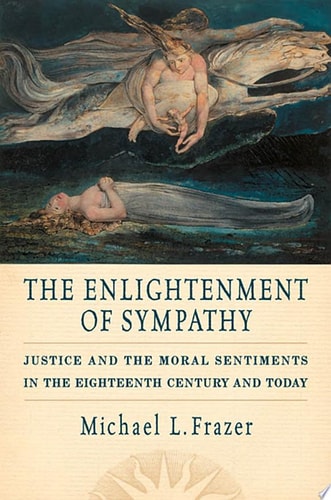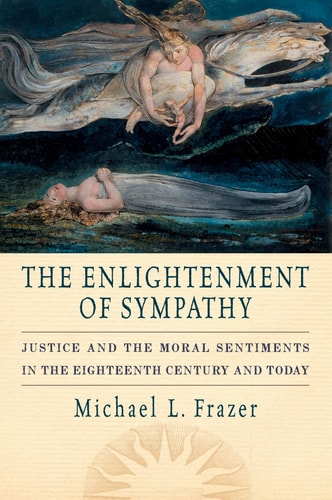
The Enlightenment of Sympathy: Justice and the Moral Sentiments in the Eighteenth Century and Today
0
0
As an Amazon Associate and affiliate partner, Menrva Books earns from qualifying purchases. Learn more
Author Description
Enlightenment thinkers of the eighteenth century were committed to the ideal of reflective autonomy--the principle that each of us should think for ourselves, particularly when determining moral and political standards. In keeping with that era's reputation as "the age of reason," many interpreted autonomy in a distinctively rationalist way--privileging reflective reason over all other mental faculties.However, other leading philosophers of the era--such as David Hume, Adam Smith, and J.G. Herder--placed greater emphasis on feeling, seeing moral and political reflection as the proper work of the mind as a whole. They argued that without emotion, imagination, and sympathy we would be incapable of developing the moral sentiments that form the basis of our commitment to justice and virtue.The Enlightenment of Sympathy reclaims the sentimentalist theory of reflective autonomy as a resource for enriching social science, normative theory, and political practice today. The sentimentalist description of the reflective process is more empirically accurate than the competing rationalist description, and can guide scientists investigating the processes by which the mind formulates moral and political principles.Yet the theory is much more than merely descriptive, and can also contribute to the philosophical project of finding principles--including principles of justice--that wield genuine normative authority. Enlightenment sentimentalism demonstrates that emotion is necessarily central to our civic life, and shows how our reflective sentiments can counterbalance the unreflective feelings that might otherwise lead our political principles astray.
Menrva's Summary
THE THESIS
This book investigates whether the sentimentalist theory of reflective autonomy, as proposed by eighteenth-century thinkers, offers a more accurate and useful framework for understanding moral and political judgment than traditional rationalist models. Michael L. Frazer, a scholar of political theory, examines the works of David Hume, Adam Smith, and J.G. Herder to argue that emotion and sympathy are essential components of the reflective process. He posits that by integrating these sentimentalist insights, contemporary social science and normative theory can better account for how individuals develop commitments to justice and virtue.
THE SCOPE MAP
What You Will Find
- An analysis of eighteenth-century moral philosophy focusing on the tension between rationalism and sentimentalism.
- A re-evaluation of the works of David Hume, Adam Smith, and J.G. Herder regarding their contributions to political theory.
- A methodology for applying historical sentimentalist frameworks to modern social science and empirical research.
- A normative argument for the role of emotion and sympathy in sustaining civic life and political justice.
THE AUTHORITY PERSPECTIVE
Scholars and political theorists frequently cite this work as a significant contribution to the study of Enlightenment thought and its relevance to modern moral psychology. Experts highlight the book's ability to bridge the gap between historical philosophical inquiry and contemporary empirical research in the social sciences.
Page Count:
246
Publication Date:
2012-07-01
Publisher:
Oxford University Press
ISBN-10:
0199920230
ISBN-13:
9780199920235
Philosophy
History
Ethics Modern
Social Science
Ethics
Enlightenment
Reason
Community Tags
Similar Books