French Moves: The Cultural Politics of Le Hip Hop
0
0
As an Amazon Associate and affiliate partner, Menrva Books earns from qualifying purchases. Learn more
Author Description
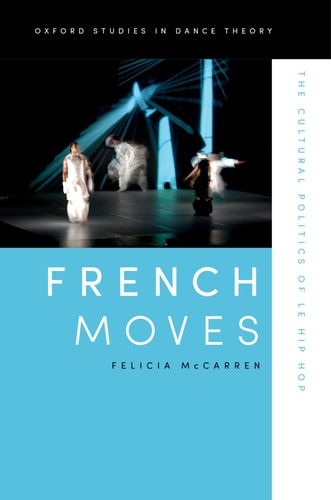
For more than two decades, le hip hop has shown another face of France: danced by minorities associated with immigration and the suburbs, it has channeled rage against racism and unequal opportunity and offered a movement vocabulary for the expression of the multicultural difference that challenges the universalist discourse of the Republic.French hip-hoppers subscribe to U.S. black culture to articulate their own difference, but in France hip-hop was championed by a Socialist cultural policy, subsumed into the cultural heritage, and instituted as a pedagogy. France supported hip-hop dance as an art of the suburbs: a multicultural mix of North African, African and Asian forms that circulate with classical and contemporary dance performance. French hip-hop develops into concert dance, becoming a civic discourse and legitimate employment, not through the familiar model of a culture industry, but within a Republic of Culture. It nuances an Anglo-Saxon model of identity politics with a francophone identity poetics and grants its dancers a national profileas artists who develop dance techniques and transmit body-based knowledge.This book, the first in English to introduce readers to the French hip-hop movement, analyzes the choreographic development of hip-hop into la danse urbaine, touring on national and international stages, as hip-hoppers move beyond thesuburbs, figuring new forms within the mobility brought by new media and global migration.
Menrva's Summary
THE THESIS
This book investigates how the French hip-hop movement, or le hip hop, functions as a vehicle for cultural politics and identity expression within the framework of the French Republic. Felicia McCarren, a scholar of dance theory, utilizes extensive research into French cultural policy and choreographic history to argue that hip-hop in France has evolved from a marginalized suburban expression into a state-sanctioned art form. By examining the intersection of immigration, race, and national identity, the author demonstrates how French dancers have adapted American hip-hop influences to create a unique 'francophone identity poetics' that challenges traditional universalist discourse.
THE SCOPE MAP
What You Will Find
- Analysis of the integration of hip-hop into French state-sponsored cultural policy and pedagogy.
- Examination of the transition of hip-hop from suburban street dance to professional concert performance.
- Discussion of the influence of North African, African, and Asian cultural forms on French urban dance.
- Exploration of how global migration and new media technologies have shaped the mobility of French hip-hop artists.
THE AUTHORITY PERSPECTIVE
Experts recognize this work as a foundational text for understanding the intersection of dance theory and French sociopolitical history. Readers frequently note the academic density of the prose, which provides a rigorous examination of how art forms are institutionalized within a national cultural framework.
Page Count:
202
Publication Date:
2013-05-30
Publisher:
Oxford University Press
ISBN-10:
0199939977
ISBN-13:
9780199939978
Music
History
Sociology
Hip-hop
Social Life
Dance
Community Tags
Similar Books