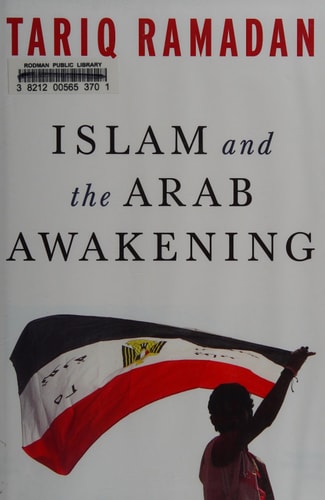
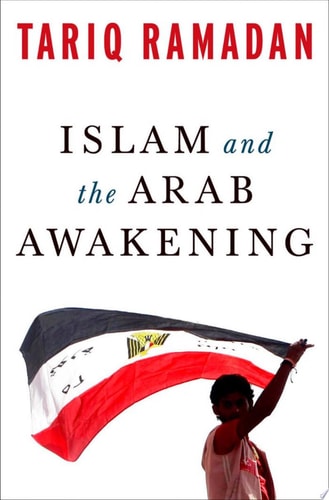
Islam and the Arab Awakening
0
0
As an Amazon Associate and affiliate partner, Menrva Books earns from qualifying purchases. Learn more
Author Description
One of the most important developments in the modern history of the Middle East, the so-called Arab Spring began in Tunisia in December 2010, bringing down dictators, sparking a civil war in Libya, and igniting a bloody uprising in Syria. Its long-term repercussions in Egypt and elsewhere remain unclear. Now one of the world's leading Islamic thinkers examines and explains it, in this searching, provocative, and necessary book.Time Magazine named Tariq Ramadan one of the most important innovators of the twenty-first century. A Muslim intellectual and prolific author, he has won global renown for his reflections on Islam and the contemporary challenges in both the Muslim majority societies and the West. In Islam and the Arab Awakening, he explores the uprisings, offering rare insight into their origin, significance, and possible futures. As early as 2003, he writes, there had been talk of democratization in the Middle East and North Africa. The U.S. government and private organizations set up networks and provided training for young leaders, especially in the use of the Internet and social media, and the West abandoned its unconditional support of authoritarian governments. But the West did not create the uprisings. Indeed, one lesson Ramadan presents is that these mass movements and their consequences cannot be totally controlled. Something irreversible has taken place: dictators have been overthrown without weapons. But, he writes, democratic processes are only beginning to emerge, and unanswered questions remain. What role will religion play? How should Islamic principles and goals be rethought? Can a sterile, polarizing debate between Islamism and secularism be avoided?Avoiding both naive confidence and conspiratorial paranoia, Ramadan voices a tentative optimism. If a true civil society can be established, he argues, this moment's fragile hope will live.
Menrva's Summary
THE THESIS
This book investigates the origins, significance, and future trajectories of the Arab Spring uprisings within the context of Islamic thought and modern political evolution. Tariq Ramadan, a prominent Islamic intellectual and scholar, utilizes his extensive background in contemporary Muslim studies to analyze the shift from authoritarian rule to emerging democratic processes. He argues that while Western influence played a role in fostering digital networks, the uprisings were fundamentally indigenous movements that defy total external control. The text seeks to reconcile the role of religion with the development of civil society, aiming to move beyond the binary opposition of secularism and Islamism.
THE SCOPE MAP
What You Will Find
- Analysis of the political landscape in Tunisia, Egypt, Libya, and Syria following 2010.
- Examination of the historical influence of Western democratization efforts in the Middle East.
- Discussion on the integration of Islamic principles within modern democratic frameworks.
- Evaluation of the challenges facing civil society in post-authoritarian states.
THE AUTHORITY PERSPECTIVE
Experts and readers recognize this work as a significant contribution to the discourse on political Islam and the complexities of the Arab Spring. The text is noted for its balanced, analytical approach that avoids simplistic narratives, making it a valuable resource for those seeking to understand the intersection of religion and governance in the modern Middle East.
Page Count:
256
Publication Date:
2012-10-01
Publisher:
Oxford University Press
ISBN-10:
0199933731
ISBN-13:
9780199933730
Religion
History
Middle East
Arab Countries
Revolutions
Sociology
Current Affairs
Islam
Community Tags
Other Editions(3)

Similar Books






Reader Comments
Share Your Thoughts
No comments yet. Be the first to share your thoughts!