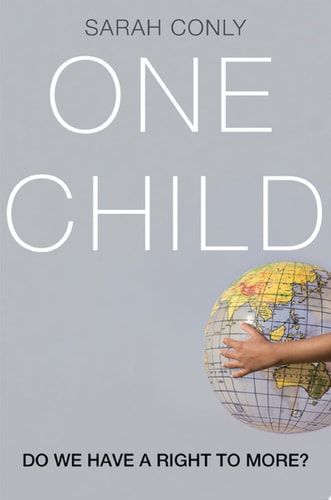
One Child: Do We Have a Right to More?
0
0
As an Amazon Associate and affiliate partner, Menrva Books earns from qualifying purchases. Learn more
Author Description
A compelling argument for the morality of limitations on procreation in lessening the harmful environmental effects of unchecked populationWe live in a world where a burgeoning global population has started to have a major and destructive environmental impact. The results, including climate change and the struggle for limited resources, appear to be inevitable aspects of a difficult future. Mandatory population control might be a possible last resort to combat this problem, but is also a potentially immoral and undesirable violation of human rights. Since so many view procreation as an essential component of the right to personal happiness and autonomy, the dominant view remains that the government does not have the right to impose these restrictions on its own citizens, for the sake of future people who have yet to exist.Sarah Conly is first to make the contentious argument that not only is it wrong to have more than one child in the face of such concerns, we do not even retain the right to do so. In One Child, Conly argues that autonomy and personal rights are not unlimited, especially if one's body may cause harm to anyone, and that the government has a moral obligation to protect both current and future citizens. Conly gives readers a thought-provoking and accessible exposure to the problem of population growth and develops a credible view of what our moral obligations really are, to generations present and future.
Menrva's Summary
THE THESIS
Does the government possess the moral authority to restrict human procreation to a single child to mitigate the catastrophic environmental impacts of overpopulation? Sarah Conly, a philosopher specializing in ethics and political theory, examines the tension between individual reproductive autonomy and the collective obligation to preserve a habitable planet. She posits that personal rights are not absolute when individual actions impose significant harm on others, arguing that the state has a duty to intervene in reproductive choices to protect the welfare of future generations.
THE SCOPE MAP
What You Will Find
- Ethical frameworks regarding reproductive rights and bodily autonomy
- Analysis of the environmental consequences of unchecked population growth
- Arguments for state-mandated population control as a moral necessity
- Philosophical justifications for limiting individual liberty for the common good
Scope Limits
- Does not provide a detailed legislative roadmap for implementation
- Does not focus on the economic mechanics of population decline
- Does not address the cultural or religious complexities of family planning in non-Western contexts
THE AUTHORITY PERSPECTIVE
Critics and scholars often note that the text presents a provocative challenge to established liberal views on reproductive freedom. The prose is accessible to non-specialists while maintaining the rigorous logical structure expected of a philosophical inquiry.
Page Count:
254
Publication Date:
2015-01-01
Publisher:
Oxford University Press
ISBN-10:
0190203382
ISBN-13:
9780190203382
Philosophy
Public Policy
Sociology
Family Size
Natural Resources
Ethics
Population Studies
Professional Career & Trade
Community Tags
Similar Books