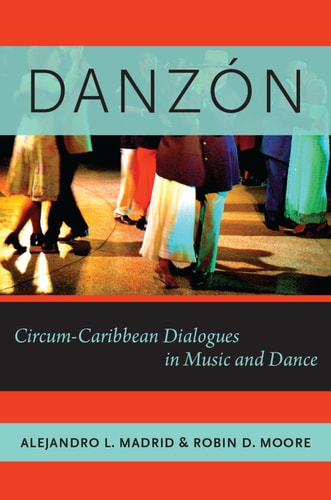
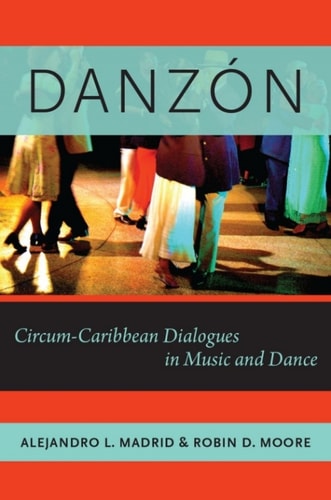
Danzón: Circum-Caribbean Dialogues in Music and Dance
0
0
As an Amazon Associate and affiliate partner, Menrva Books earns from qualifying purchases. Learn more
Author Description
Initially branching out of the European contradance tradition, the danzón first emerged as a distinct form of music and dance among black performers in nineteenth-century Cuba. By the early twentieth-century, it had exploded in popularity throughout the Gulf of Mexico and Caribbean basin. A fundamentally hybrid music and dance complex, it reflects the fusion of European and African elements and had a strong influence on the development of later Latin dance traditions as well as early jazz in New Orleans. Danzón: Circum-Caribbean Dialogues in Music and Dance studies the emergence, hemisphere-wide influence, and historical and contemporary significance of this music and dance phenomenon.Co-authors Alejandro L. Madrid and Robin D. Moore take an ethnomusicological, historical, and critical approach to the processes of appropriation of the danzón in new contexts, its changing meanings over time, and its relationship to other musical forms. Delving into its long history of controversial popularization, stylistic development, glorification, decay, and rebirth in a continuous transnational dialogue between Cuba and Mexico as well as New Orleans, the authors explore the production, consumption, and transformation of this Afro-diasporic performance complex in relation to global and local ideological discourses. By focusing on interactions across this entire region as well as specific local scenes, Madrid and Moore underscore the extent of cultural movement and exchange within the Americas during the late nineteenth and early twentieth-centuries, and are thereby able to analyze the danzón, the dance scenes it has generated, and the various discourses of identification surrounding it as elements in broader regional processes. Danzón is a significant addition to the literature on Latin American music, dance, and expressive culture; it is essential reading for scholars, students, and fans of this music alike.
Menrva's Summary
THE THESIS
This work investigates the historical emergence, transnational evolution, and cultural significance of the danzón as a hybrid music and dance complex within the Caribbean basin. Authors Alejandro L. Madrid and Robin D. Moore utilize an ethnomusicological and historical framework to analyze how this form originated in nineteenth-century Cuba and subsequently influenced musical developments in Mexico and New Orleans. By examining the processes of appropriation and stylistic transformation, the authors argue that the danzón serves as a critical lens for understanding broader regional ideological discourses and Afro-diasporic cultural exchange.
THE SCOPE MAP
What You Will Find
- Historical analysis of the danzón from its European contradance roots to its twentieth-century popularity.
- Examination of the transnational dialogue between Cuba, Mexico, and New Orleans.
- Discussion of the relationship between the danzón and the development of early jazz.
- Critical exploration of how local and global discourses shape the meaning of performance complexes.
THE AUTHORITY PERSPECTIVE
Scholars and students of Latin American music frequently cite this text as a rigorous, foundational study of regional expressive culture. Experts highlight the authors' ability to synthesize complex historical data with ethnomusicological theory to provide a comprehensive view of the danzón's enduring influence.
Page Count:
304
Publication Date:
2013-11-29
Publisher:
Oxford University Press
ISBN-10:
019996582X
ISBN-13:
9780199965823
History
Music
Criticism history
Dance
Community Tags
Other Editions(2)
Similar Books




Reader Comments
Share Your Thoughts
No comments yet. Be the first to share your thoughts!