Accountability for Killing
0
0
As an Amazon Associate and affiliate partner, Menrva Books earns from qualifying purchases. Learn more
Author Description
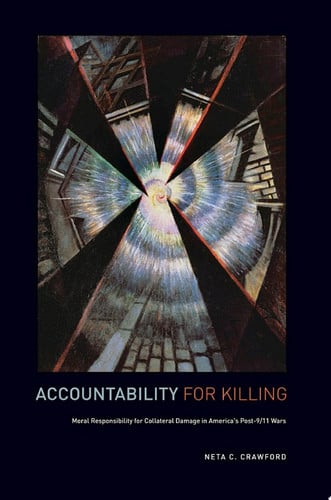
The unintended deaths of civilians in war are too often dismissed as unavoidable, inevitable, and accidental. And despite the best efforts of the U.S. to avoid them, civilian casualties in Afghanistan, Iraq, and Pakistan have been a regular feature of the United States' wars after 9/11. In Accountability for Killing, Neta C. Crawford focuses on the causes of these many episodes of foreseeable collateral damage and the moral responsibility for them. The dominant paradigm of legal and moral responsibility in war today stresses both intention and individual accountability. Deliberate killing of civilians is outlawed and international law blames individual soldiers and commanders for such killing. An individual soldier may be sentenced life in prison or death for deliberately killing even a small number of civilians, but the large scale killing of dozens or even hundreds of civilians may be forgiven if it was unintentional--"incidental"--to a military operation. The very law that protects noncombatants from deliberate killing may allow many episodes of unintended killing. Under international law, civilian killing may be forgiven if it was unintended and incidental to a militarily necessary operation. Given the nature of contemporary war, where military organizations-training, and the choice of weapons, doctrine, and tactics-create the conditions for systemic collateral damage, Crawford contends that placing moral responsibility for systemic collateral damage on individuals is misplaced. She develops a new theory of organizational moral agency and responsibility, and shows how the US military exercised moral agency and moral responsibility to reduce the incidence of collateral damage in America's most recent wars. Indeed, when the U.S. military and its allies saw that the perception of collateral damage killing was causing it to lose support in the war zones, it moved to a "population centric" doctrine, putting civilian protection at the heart of its strategy.
Menrva's Summary
THE THESIS
How can moral responsibility for systemic civilian casualties be accurately assigned when current legal frameworks prioritize individual intent over organizational outcomes? Neta C. Crawford, a scholar of international relations and military ethics, examines the discrepancy between the legal treatment of individual war crimes and the systemic nature of collateral damage in post-9/11 U.S. military operations. By analyzing military doctrine, training, and weapon selection, Crawford argues that the current focus on individual accountability is insufficient for addressing the large-scale, unintended deaths that result from institutional choices. She proposes a framework of organizational moral agency to better account for the systemic causes of civilian harm.
THE SCOPE MAP
What You Will Find
- Analysis of U.S. military operations in Afghanistan, Iraq, and Pakistan post-9/11.
- A critique of international humanitarian law regarding the distinction between deliberate and incidental killing.
- Development of a new theory of organizational moral agency and responsibility.
- Examination of the shift toward population-centric military doctrines as a response to the strategic costs of collateral damage.
THE AUTHORITY PERSPECTIVE
Experts in international relations and military ethics recognize this work as a significant contribution to the discourse on modern warfare and institutional accountability. Readers frequently note the academic rigor of the text, which challenges conventional legal interpretations of civilian protection in conflict zones.
Page Count:
0
Publication Date:
2013-01-01
Publisher:
Oxford University Press, Incorporated
ISBN-10:
0199981736
ISBN-13:
9780199981731
Civilian war casualties
War
International Law
Military History
War Victims
Warfare
Ethics
Community Tags
Other Editions(2)
Similar Books










Reader Comments
Share Your Thoughts
No comments yet. Be the first to share your thoughts!