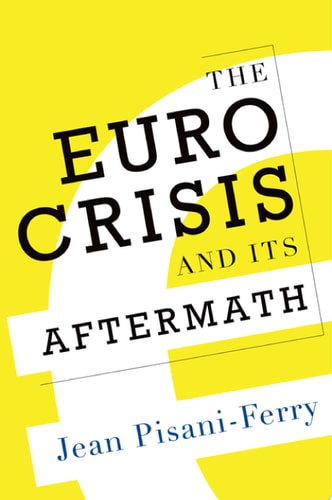
The Euro Crisis and Its Aftermath
0
0
As an Amazon Associate and affiliate partner, Menrva Books earns from qualifying purchases. Learn more
Author Description
The euro's life, while only slightly more than a decade long, has been riddled by a series of challenges and crises. The eruption of the Greek crisis in 2010 took European policymakers by surprise and forced them to design responses to a quickly deteriorating situation. Even though Europe has final begun to stabilize, the disparity between the prosperous Northern countries, especially Germany, and the plummeting Southern countries, including Spain and Greece, has exacerbated economic and political problems within the Eurozone. Amidst loud and frequent debates, solutions have been enacted, but the struggles facing this monetary union continue to develop even today.The Euro Crisis and Its Aftermath was written to inform readers about the roots of this enduring European crisis and the alternative proposals for ending it. In four parts, Jean Pisani-Ferry explains the origins of the European currency, the build-up of imbalances and oversights that led to the crisis, the choices European policymakers have both addressed and ignored since 2010, and the evolution of the policy agenda and possible options for the future. The book is as much of an informative and analytical history as it is a discussion of solutions for a more prosperous European economy.Rather than putting forth and supporting a thesis, Pisani-Ferry helps readers understand the past and present of the euro crisis and form their own opinions about potential solutions. This book is not intended to reach only economists, as time has long passed since European monetary unification was a debate limited to academics. This book is also for the policy makers searching for solutions, citizens of Europe enduring the consequences, and the international community that has felt the effects of an unstable Eurozone.
Menrva's Summary
THE THESIS
How did the structural design of the Eurozone contribute to the systemic economic crises that emerged in 2010, and what policy paths remain for long-term stabilization? Jean Pisani-Ferry, a prominent economist and policy advisor, utilizes his extensive background in European institutional frameworks to dissect the origins and progression of the currency union's instability. The book provides a comprehensive analysis of the divergence between Northern and Southern member states, evaluating the efficacy of various interventions implemented by policymakers. By synthesizing historical data with contemporary political realities, the author constructs a framework for understanding the complex trade-offs inherent in monetary integration.
THE SCOPE MAP
What You Will Find
- Historical analysis of the origins and implementation of the European currency.
- Examination of the economic imbalances between Northern and Southern Eurozone nations.
- Evaluation of policy responses to the 2010 Greek crisis and subsequent regional instability.
- Assessment of future policy agendas and potential structural reforms for the monetary union.
THE AUTHORITY PERSPECTIVE
Experts and policy analysts frequently cite this work as a balanced, accessible primer on the mechanics of the Eurozone crisis. Readers note that the text successfully bridges the gap between technical economic analysis and the broader political implications for European citizens.
Page Count:
206
Publication Date:
2014-05-01
Publisher:
Oxford University Press
ISBN-10:
0199993335
ISBN-13:
9780199993338
Economics
History
Finance
European History
European Union
Euro
International relations
Eurozone
Community Tags
Other Editions(3)

Similar Books















Reader Comments
Share Your Thoughts
No comments yet. Be the first to share your thoughts!