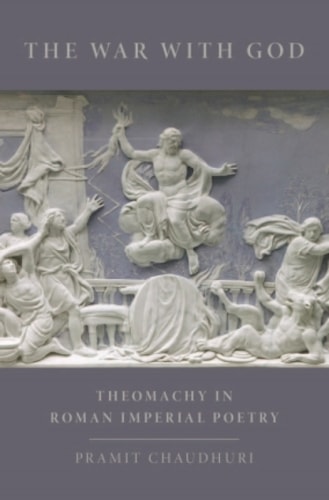
The War with God: Theomachy in Roman Imperial Poetry
0
0
As an Amazon Associate and affiliate partner, Menrva Books earns from qualifying purchases. Learn more
Author Description
Epic and tragedy, from Homer's Achilles and Euripides' Pentheus to Marlowe's Tamburlaine and Milton's Satan, are filled with characters challenging and warring against the gods. Nowhere is the theme of theomachy more frequently and powerfully represented, however, than in the poetry of early imperial Rome, from Ovid's Metamorphoses at the beginning of the first century AD to Statius' Thebaid near its end. This book -- the first full-length study of human-divine conflict in Roman literature -- asks why the war against god was so important to the poets of the time and how this understudied period of literary history influenced a larger tradition in Western literature. Drawing on a variety of contexts -- politics, religion, philosophy, and aesthetics -- Pramit Chaudhuri argues for the fundamental importance of battles between humans and gods in representing the Roman world. A cast of tyrants, emperors, rebels, iconoclasts, philosophers, and ambitious poets brings to life some of the most extraordinary artistic products of classical antiquity. Based on close readings of the major extant epics and selected tragedies, the book replaces a traditionally Aeneid-centric view of imperial epic with a richer dialogue between Greek and Roman texts, contemporary authors, and diverse genres. The renewed sense of a tradition reveals how the conflicts these works represent constitute a distinctive theology informed by other discourses yet peculiar to epic and tragedy. Beginning with the Greek background and ending with a look ahead to developments in the Renaissance, this book charts the history of a theme that would find its richest expression in a time when men became gods and impiety threatened the very order of the world.
Menrva's Summary
THE THESIS
This book investigates the significance and evolution of theomachy—human-divine conflict—within the poetry of early imperial Rome. Pramit Chaudhuri, a scholar of classical literature, examines how this theme functions as a central pillar of Roman epic and tragedy. By analyzing texts from Ovid to Statius, the author argues that these depictions of rebellion against the divine reflect the complex political, philosophical, and aesthetic tensions of the Roman imperial period.
THE SCOPE MAP
What You Will Find
- A comprehensive analysis of theomachy in major Roman epics and selected tragedies from the first century AD.
- A comparative framework that moves beyond the traditional Aeneid-centric focus to include Greek influences and Renaissance developments.
- An interdisciplinary methodology incorporating political history, religious studies, and philosophical discourse.
- A detailed exploration of how human-divine conflict serves as a metaphor for power, tyranny, and the stability of the cosmic order.
THE AUTHORITY PERSPECTIVE
Scholars recognize this work as a significant contribution to the study of Roman imperial literature, particularly for its departure from traditional interpretive models. Readers frequently note the academic density of the prose, which provides a rigorous examination of classical texts for students and researchers alike.
Page Count:
416
Publication Date:
2014-01-01
Publisher:
Oxford University Press
ISBN-10:
0199993394
ISBN-13:
9780199993390
Philosophy
History
Poetry
Religion
English & College Success
Literary Criticism
English
Ancient History
Latin poetry
Community Tags
Similar Books