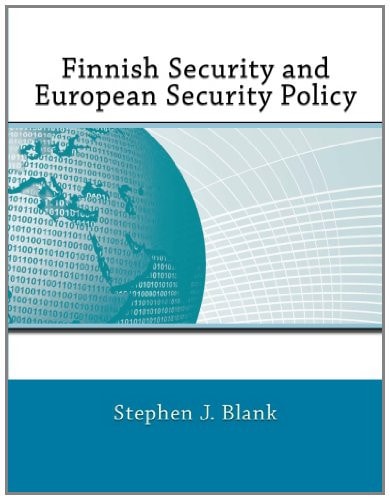
Finnish Security and European Security Policy
0
0
As an Amazon Associate and affiliate partner, Menrva Books earns from qualifying purchases. Learn more
Author Description
When Finland joined the European Union (EU) in 1995, it completed a fundamental transformation of its security policy. Until the end of the Cold War, Finland's position in Europe derived from its treaty with the Soviet Union which imposed neutrality upon it and debarred Finland from any security cooperation with Scandinavia, Western Europe, and the United States. The end of the Cold War and the fall of the Soviet Union allowed Finland to move towards European integration through the EU while preserving its own independent defense posture. Other reasons for moving towards the EU stemmed from Finland's new economic vulnerability to trends in the European economy, and its determination that current security challenges no longer included the Cold War threat of military invasion. Rather, current dangers involved the risk of a collapse of Russia's social or political infrastructure which could then confront Helsinki with challenges that it could not meet alone. Therefore, Finland needed to find ways of associating with other states to meet those nonmilitary challenges and, at the same time, terminate its erstwhile political isolation by participating in European integration. It chose the EU over the North Atlantic Treaty Organization (NATO) because the expansion of NATO to its border would have alarmed Moscow and because Helsinki viewed the threats to Europe as being essentially nonmilitary, and thus outside NATO's mandate or purview. Also, as Finland emerged from the Cold War, it found itself exposed to severe economic dislocations, if not crises, that forced integration upon both it and Sweden (whose international economic lead Finland had to follow). But, by opting for EU and European integration, Finland stimulated fears at home that it was abandoning its reliance on self-defense and chasing what might prove to be an elusive form of indirect political guarantees in future crises. Other domestic groups worried that Finland might be drawn into European crises of others'
Menrva's Summary
THE THESIS
This book examines Finland's strategic pivot from Cold War neutrality to European Union membership and its implications for both Finnish and broader European security. Following the dissolution of the Soviet Union, Finland transitioned from a policy dictated by its treaty with Moscow to one of independent defense and European integration. The author details how economic vulnerabilities and evolving security threats, particularly the potential instability in Russia, necessitated a move towards collective security arrangements, leading Finland to choose the EU over NATO due to the latter's military focus and potential to alarm Moscow.
THE SCOPE MAP
- Analysis of Finland's security policy transformation post-Cold War.
- Examination of the historical context of Finland's treaty with the Soviet Union.
- Discussion of Finland's economic integration with Europe and its impact on security.
- Assessment of non-military security challenges, including Russian instability.
- Comparison of Finland's choice between EU membership and NATO.
- Exploration of domestic concerns regarding reliance on indirect political guarantees.
THE AUTHORITY PERSPECTIVE
The book analyzes Finland's strategic shift following the end of the Cold War, detailing its move from Soviet-imposed neutrality to EU membership. It explores the motivations behind this transition, including economic factors and the changing nature of security threats. The work also touches upon the domestic debate concerning Finland's new security posture and its potential reliance on collective European security arrangements.
Page Count:
36
Publication Date:
1996-01-01
Publisher:
Strategic Studies Institute, U.S. Army War College
ISBN-10:
146371307X
ISBN-13:
9781463713072
History
Politics
Non-Fiction
National security
Geopolitics
International relations
Foreign Policy
European Union
Community Tags
Similar Books