Christianity, Islam, and Liberal Democracy
0
0
As an Amazon Associate and affiliate partner, Menrva Books earns from qualifying purchases. Learn more
Author Description
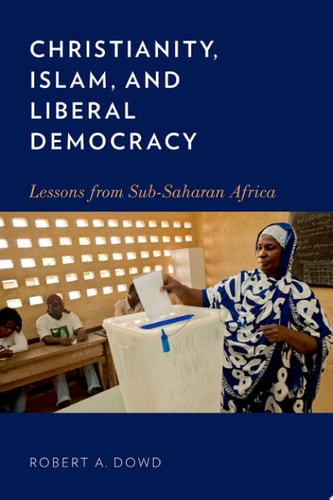
Drawing From Research Conducted In Nigeria, Senegal, And Uganda, Christianity, Islam, And Liberal Democracy Offers A Deeper Understanding Of How Christian And Islamic Faith Communities Affect The Political Attitudes Of Those Who Belong To Them And, In Turn, Prospects For Liberal Democracy. While Many Analysts Believe That Religious Diversity In Developing Countries Is An Impediment To Liberal Democracy, Robert A. Dowd Concludes Just The Opposite. Dowd Draws On Narrative Accounts, In-depth Interviews, And Large-scale Surveys To Show That Christian And Islamic Religious Communities Are More Likely To Support Liberal Democracy In Religiously Diverse And Integrated Settings Than In Religiously Homogeneous Or Segregated Ones. Religious Diversity And Integration, In Other Words, Are Good For Liberal Democracy. In Religiously Diverse And Integrated Environments, Religious Leaders Tend To Be More Encouraging Of Civic Engagement, Democracy, And Religious Liberty. By Providing A Theoretical Framework For Understanding When And Where Christian And Islamic Communities In Sub -saharan Africa Encourage And Discourage Liberal Democracy, Dowd Demonstrates How Religious Communities Are Important In Affecting Political Actions And Attitudes. This Evidence, The Book Ultimately Argues, Should Prompt Policymakers Interested In Cultivating Religiously-inspired Support For Liberal Democracy To Aid In The Formation Of Religiously Diverse Neighborhoods, Cities, And Political Organizations.
Menrva's Summary
THE THESIS
Does religious diversity in developing nations hinder or facilitate the development of liberal democracy? Robert A. Dowd, a political scientist specializing in African politics, investigates this question by analyzing the intersection of faith communities and political behavior. He argues that contrary to common assumptions, religious diversity and integration within communities actually foster stronger support for democratic principles and civic engagement.
THE SCOPE MAP
What You Will Find
- Comparative analysis of Christian and Islamic communities in Nigeria, Senegal, and Uganda.
- A theoretical framework linking religious integration to political attitudes.
- Empirical data regarding the influence of religious leaders on civic participation.
Scope Limits
- The study is geographically restricted to specific regions within Sub-Saharan Africa.
- The research focuses primarily on the institutional and social effects of religion rather than theological doctrine.
THE AUTHORITY PERSPECTIVE
Scholars in comparative politics recognize this work as a significant contribution to the study of religion and democratization in the Global South. Experts frequently cite the book for its rigorous use of mixed-methods research to challenge conventional wisdom regarding religious pluralism.
Page Count:
224
Publication Date:
2015-01-01
Publisher:
Oxford University Press
ISBN-10:
019022522X
ISBN-13:
9780190225223
Religion
Sociology
Democracy
Comparative Politics
Community Tags
Other Editions(2)

Similar Books