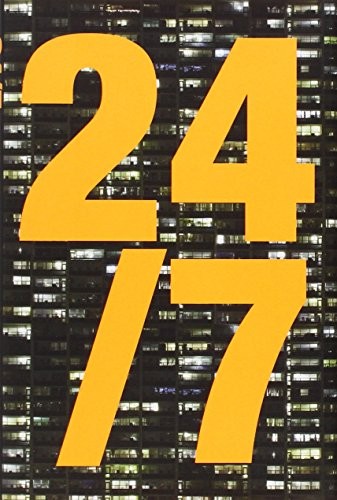
24/7: Late Capitalism and the Ends of Sleep
0
0
As an Amazon Associate and affiliate partner, Menrva Books earns from qualifying purchases. Learn more
Author Description
24/7: Late Capitalism and the Ends of Sleep explores some of the ruinous consequences of the expanding non-stop processes of twenty-first-century capitalism. The marketplace now operates through every hour of the clock, pushing us into constant activity and eroding forms of community and political expression, damaging the fabric of everyday life. Jonathan Crary examines how this interminable non-time blurs any separation between an intensified, ubiquitous consumerism and emerging strategies of control and surveillance. He describes the ongoing management of individual attentiveness and the impairment of perception within the compulsory routines of contemporary technological culture. At the same time, he shows that human sleep, as a restorative withdrawal that is intrinsically incompatible with 24/7 capitalism, points to other more formidable and collective refusals of world-destroying patterns of growth and accumulation.-- Publisher description.
Menrva's Summary
THE THESIS
The relentless expansion of 24/7 capitalism has fundamentally altered human experience, particularly by eroding the necessity and possibility of sleep. Jonathan Crary, a noted cultural theorist, investigates the detrimental effects of this ceaseless economic activity, which now permeates every hour of the day. He argues that this perpetual non-time fosters ubiquitous consumerism while simultaneously enabling new forms of control and surveillance, leading to the management of individual attention and the impairment of perception within contemporary technological culture. Crary posits that human sleep, as a vital withdrawal incompatible with this system, represents a potential for collective refusal against destructive growth and accumulation patterns.
THE SCOPE MAP
- Analysis of the consequences of the 24/7 non-stop processes of twenty-first-century capitalism.
- Examination of how the marketplace's operation through every hour of the clock impacts community and political expression.
- Discussion of the damage to the fabric of everyday life caused by incessant activity.
- Exploration of the blurring lines between intensified consumerism and emerging strategies of control and surveillance.
- Description of the ongoing management of individual attentiveness and the impairment of perception.
- Argument for sleep as a restorative withdrawal intrinsically incompatible with 24/7 capitalism.
- Identification of sleep as a potential for collective refusal against world-destroying patterns of growth and accumulation.
THE AUTHORITY PERSPECTIVE
Jonathan Crary's "24/7: Late Capitalism and the Ends of Sleep" is recognized for its incisive critique of contemporary economic and social structures. The book is noted for its detailed examination of how the ceaseless demands of late capitalism impact individual perception and collective life. Critics often highlight Crary's argument that the erosion of sleep is a symptom of a broader societal shift towards constant productivity and consumption. The work is frequently cited in discussions concerning technology, surveillance, and the future of human experience in an increasingly interconnected and always-on world.
Page Count:
144
Publication Date:
2013-01-01
ISBN-10:
1781680930
ISBN-13:
9781781680933
Non-Fiction
Science
Philosophy
Art
Economics
Sociology
Community Tags
Similar Books